History Highlights 4: Darwin’s Wild Ride, Losing Lenses, Finding Lunar Landers

My schedule has become highly variable due to grad school and freelance work. I’m currently working on a series of posts about scientific photography on the British Antarctic Expedition–so far you can read a short introduction, and a post about Herbert Ponting’s early photographs of animals and ice. I’m still working on the next post in that series, which will focus more on the scientists of the Terra Nova expedition and their work, as seen through Ponting’s lens. Until then, here’s a new History Highlights–a periodic collection of new work and other interesting things in the history of science, exploration, and technology.

Recent History

News and new work in science, exploration, and technology.
Newly Digitized Antarctic Photography

Speaking of photography in Antarctica, the National Archives of Australia recently uploaded a number of photographs from Antarctic expeditions to their online system. Their records are a little difficult to navigate, but here’s a link to the site. I’m planning to look through these images for my research, and to see if there’s anything useful for the Herbert Ponting series I’m working on.

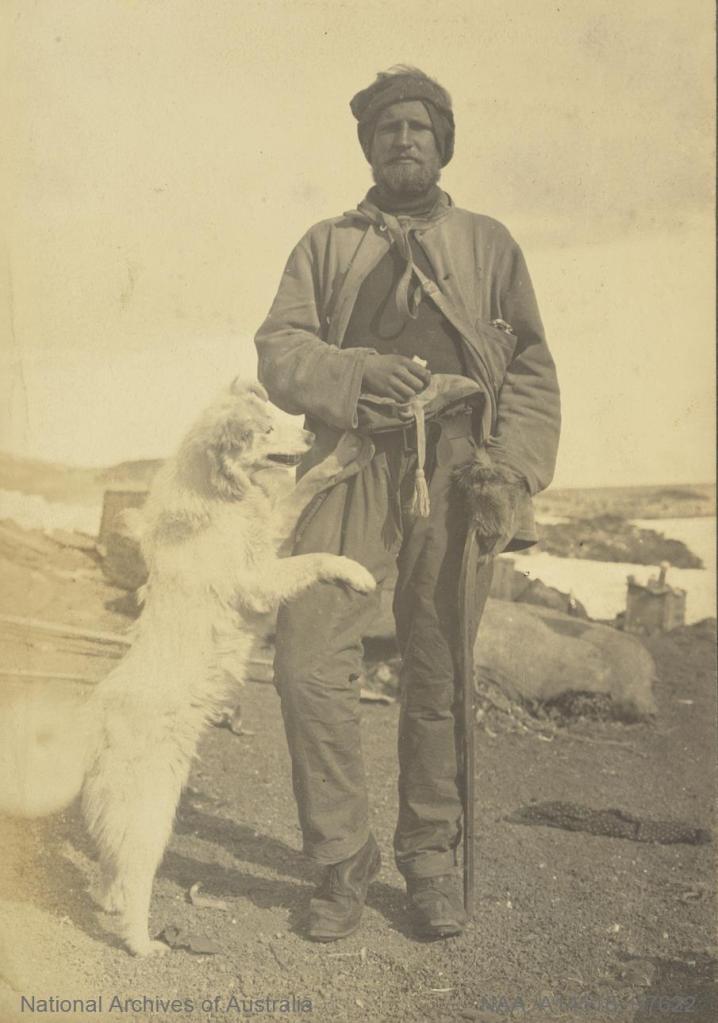
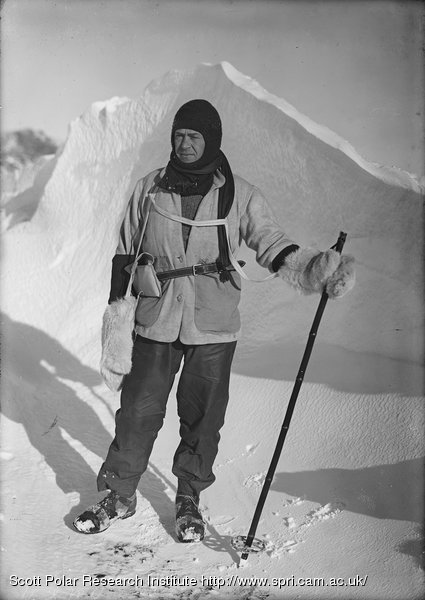
Raymond Priestly was a geologist who participated in both the Nimrod and Terra Nova expeditions to Antarctica under Shackleton and Scott. Here he is on the Nimrod expedition in 1908. He would go on to co-found the Scott Polar Research Institute. From NAA A14518 H7622.
Reconceptualizing the History of Science

Eric Moses Gurevitch shares an excellent article he wrote covering books by James Poskett and Pamela H. Smith. These works are part of an effort to broaden the history of science beyond the conventional narratives that have roots in nineteenth century chauvinisms. This re-conceptualization opens up new research possibilities in the history of science, and draws attention to the myriad ways humans have produced and shared knowledge about nature.

Miscellanea

Various highlights from my research, readings, and internet rabbit holes
Mr. Darwin’s Wild Ride

While Charles Darwin was in the Galapagos studying the rocks, plants, and animals, he used a wide variety of observational techniques. One of these apparently involved riding the tortoises:

I was always amused, when overtaking one of these great monsters as it was quietly pacing along, to see how suddenly, the instant I passed, it would draw in its head and legs, and uttering a deep hiss fall to the ground with a heavy sound, as if struck dead. I frequently got on their backs, and then, upon giving a few raps on the hinder part of the shell, they would rise up and walk away; but I found it very difficult to keep my balance.

Charles Darwin, Voyage of the Beagle
Sunken Treasure at the Bottom of McMurdo Sound

There is apparently a small treasure waiting to be recovered from the sea floor near Antarctica. As he was trying to photograph orcas from the deck of the Terra Nova, Herbert Ponting lost his favorite camera lens:

I leant over the poop rail…waiting for the whales to draw nearer, when, as I was about to release the shutter, the view disappeared from the finder, and light flooded the camera; at the same moment I heard something splash in the water. On examining the camera, what was my consternation to find that the lens-board had dropped into the sea, carrying with the the finest lens of my collection–a nine-inch Zeiss double protar, worth about £25, which had been presented to me some years ago by the Bausch and Lomb Optical Company of Rochester, U.S.A.

Herbert Ponting, The great white South; being an account of experiences with Captain Scott’s South pole expedition and of the nature life of the Antarctic

He sent a letter to Bausch and Lomb, and they sent him a new lens. But the old lens must still be there, two hundred fathoms (as Ponting claimed) under the surface of McMurdo Sound. I tried to find the lens he used, and came across a catalog from 1904 with a listing of Bausch and Lomb lenses. From Ponting’s description of the lens and his uses for it–both whales and scenic views–I think the lens below is probably the closest. I would love it if anyone with more expertise in historical photographic equipment would be able to provide some more insight.

This probably isn’t the same exact lens Ponting dropped into McMurdo Sound, but it may be similar. Catalog found in the reference library of Pacific Rim Camera.
First Lunar Rover found through “Space Archaeology”

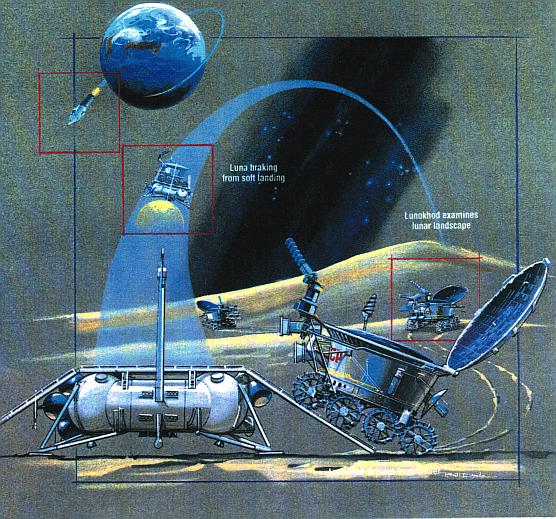
Lunokhod was a Soviet spacecraft that became the first rover on another planetary body in 1970. The rover’s solar cells deployed using a unique clamshell design, and used cameras on each side of the vehicle for navigation.

Lunokhod mission outline. From Wikimedia.
Model of the rover in the Museum of Cosmonautics. From Wikimedia.

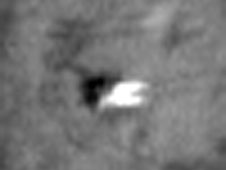
In 2010, Lunokhod 1 was found, and was even capable of being used again for scientific experiments. The rover was equipped with retroreflectors like the one left by Apollo astronauts. This is actually how its final resting site was accidentally identified, when astrophysicist Tom Murphy was using a pulsed laser to study the lunar surface. The Lunar Reconnaissance Orbiter was able to use those coordinates to take new images of the Lunokhod landing site and lander forty years after its original mission.

Luna 17 lander, from NASA/GSFC/Arizona State University.
Discourse on Things that Float

Galileo apparently got into a debate with a contemporary over dinner about why things float in water. This turned into an entire treatise on how things float, in which Galileo drew from preceding work by Archimedes. He also talks about some of his astronomical work. Here are a few quotes, with an example of the type of principles he discusses in the treatise:

This sufficeth me, for my present occasion, to have, by the above declared Examples, discovered and demonstrated, without extending such matters farther, and, as I might have done, into a long Treatise: yea, but that there was a necessity of resolving the above proposed doubt, I should have contented my self with that only, which is demonstrated by Archimedes, in his first Book De Insidentibus humido: where in generall termes he infers and confirms the same Of Natation (a) Lib. 1, Prop. 4. (b) Id. Lib. 1. Prop. 3. (c) Id. Lib. 1. Prop. 3. Conclusions, namely, that Solids (a) less grave than water, swim or float upon it, the (b) more grave go to the Bottom, and the (c) equally grave rest indifferently in all places, yea, though they should be wholly under water.

But, because that this Doctrine of Archimedes, perused, transcribed and examined by Signor Francesco Buonamico, in his fifth Book of Motion, Chap. 29, and afterwards by him confuted, might by the Authority of so renowned, and famous a Philosopher, be rendered dubious, and suspected of falsity; I have judged it necessary to defend it, if I am able so to do, and to clear Archimedes, from those censures, with which he appeareth to be charged….

The diversity of Figures given to this or that Solid, cannot any way be a Cause of its absolute Sinking or Swimming.

So that if a Solid being formed, for example, into a Sphericall Figure, doth sink or swim in the water, I say, that being formed into any other Figure, the same figure in the same water, shall sink or swim: nor can such its Motion by the Expansion or by other mutation of Figure, be impeded or taken away.

Galileo Galilei, Discourse on Floating Bodies

For more History Highlights from past weeks, click here. Follow the Inverting Vision Twitter account for updates on posts and other history of exploration and science content. Subscribe to get update in your inbox:

Photography and Science in Antarctica – Orcas and Ice

This is part two of a series of posts about photography and science on the Terra Nova expedition of 1910-193. You can read the introduction here. This week we find Ponting arriving in Antarctica, and beginning to get acquainted with the environment.

The Terra Nova. Ponting was a fan of icicles, and tried to include them in his shots whenever possible. From the Scott Polar Research Institute (SPRI).

Scientific curiosity drew photographer Herbert Ponting to Antarctica. Before his journey with the British Antarctic Expedition in 1910, the great southern continent was already a place of growing scientific interest. Early encounters in the late 18th and early 19th centuries had revealed ice shelves, animals, and mountains that encouraged dedicated missions to chart and understand the continent. James Weddel, Jules Dumont d’Urville, Charles Wilkes, and James Clark Ross revealed the contours of Antarctica, and returned to Europe and the United States with tantalizing information for biologists and geologists. 

Herbert Ponting was particularly interested in the animals of the Antarctic. Several years before Ponting climbed aboard the Terra Nova, his crew mates Robert Falcon Scott and Edward Wilson had made a landing on Ross Island during the Discovery expedition. In his diaries, Wilson vividly described the smells and sounds that greeted them when they made landfall at Cape Crozier–they had found one of the largest colonies of Adelie penguins. Ponting fantasized about being able to make camp at Cape Crozier and photograph the penguins there, but Scott chose Cape Evans on the other side of the island for their base of operations. 

Once they arrived, the crew used their tracked motor sledges to unload shelter materials and supplies. Ponting still had plenty of opportunity to observe and photograph wildlife. There was a colony of Adelie penguins near their camp, and the birds were not shy about greeting the visitors. “They strolled about,” Ponting wrote, “for all the world like a party of tourists taking in the sights.”1 This delighted the photographer, and he took photographs of their interactions with the crew, who liked to play games with the penguins.

An Adelie penguin pecks Ponting. From SPRI.
Henry Rennick and Francis Drake meet the penguins. From SPRI.

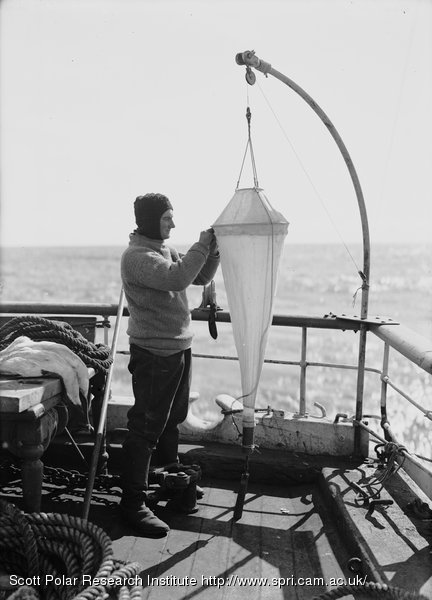
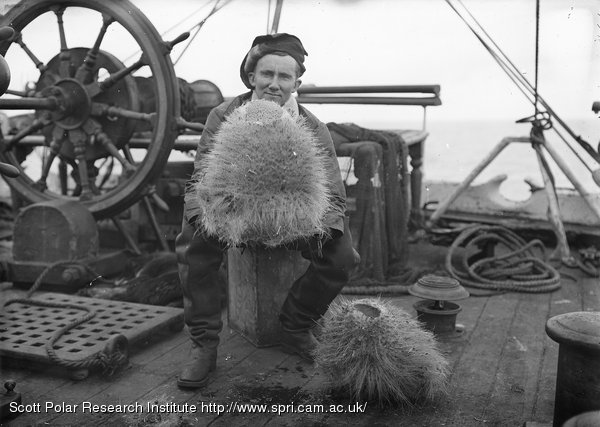
Later in the expedition, the scientific team would learn more about the life cycle and behaviors of the penguins. In the meantime, the crew at Cape Evans spent time studying other examples of marine life. The biologist Denis Lillie collected as many samples as possible with nets. These included an example of cephalodiscus, which are wormlike animals that live in colonies. They also caught “crustacea, star-fish, sea-urchins, great worms, anemones, molluscs,” and large glass sponges.

Denis Lille and his net. From SPRI.
Denis Lille and a glass sponge. From SPRI.

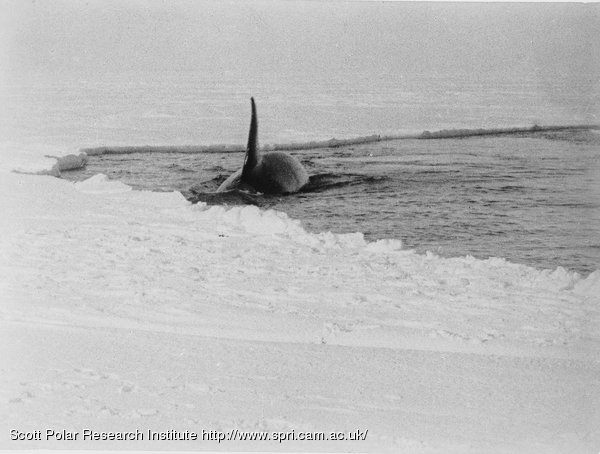
But Ponting was more interested in the animal that had accompanied their ship on the way to their temporary home: the orca. Ponting was keen to capture animal behaviors with his camera, in an effort to make his own contributions to the scientific work of the expedition. The orca and the blue whales were his first opportunity, but he found them exceedingly difficult to capture on film. It was difficult to predict when they would surface, so setting up a camera to capture things like their ‘spout’ was almost impossible. But he managed to capture some of their surfacing and hunting behavior with the cinematograph.

The top two images show orcas surfacing. The bottom pictures supposedly shows them hunting. From SPRI.

Ponting even tried to use his equipment to document and understand whale behavior, to the extent that he could. He used the frame rate of his camera (sixteen frames a second) to measure the duration of the orca’s spout. He tried to capture their grouping and hunting patterns, but was frustrated by the challenges of catching them at the right time. He never did get a film of the blue whales spouting. He also never got a film of whales breaching, despite sitting for nine hours at a spot where he saw one of the  “sportive monsters” perform the spectacular maneuver. 

The intelligence of the whales impressed both Ponting and the crew, and they were amazed by the hunting ability of the orcas. Ponting himself claimed to have been hunted while trying to get just the right shot of an orca, and included a fantastical illustration of the encounter. 

Ponting claimed that this was a very accurate portrayal of the attack. From his book.

The illustration demonstrates some of Ponting’s editorial inclinations. Ponting was an excellent photographer but he was an equally good salesman who was constantly searching for the spectacular and the picturesque. This made him well-suited to his role on the expedition. Photographs and books were a way to make some money from exploration, and they would be in high demand back home.2 Ponting’s photographs have to be viewed with this fact in mind–he was interested in science, but the picturesque held priority. 

Especially early on in the expedition, Ponting’s shots of crew members were often very carefully posed, and his shots of scientific subjects were as controlled as he could make them. His photographs of the whales are interesting in part because of the relative lack of control he had over his subjects.

Ponting found some degree of control in the ice, along with some of the most picturesque scenery he would encounter. The icebergs and ice floes of Antarctic waters captivated and frightened European explorers from the earliest days of Antarctic exploration. Edmond Halley (of comet fame) described encounters with Antarctic ice on his voyage to map magnetic variation in 1699. At first he first thought they were white mountains, and he compared them to white cliffs found in Great Britain. Later expeditions grappled with the ice, and some fell prey to it.

For mariners the ice represented unpredictability, but for the photographer they were relatively static (although still temporary) pieces of natural beauty. Ponting relished the long periods of daylight that he could use to capture the ice in different light conditions. He didn’t want to lose this opportunity, and slept very little for four days on end, working as long as “human endurance would permit.”

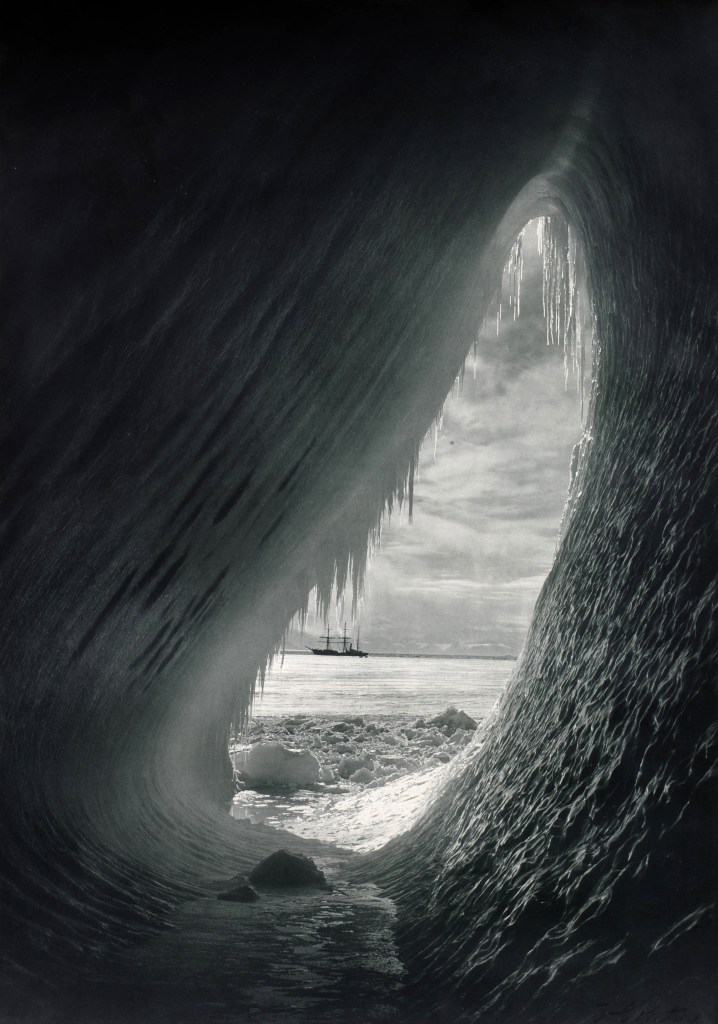
His most famous photograph captures the Terra Nova from within a grotto of ice. In his book, he described taking the picture:

A fringe of long icicles hung at the entrance of the grotto, and passing under these I was in the most wonderful place imaginable. From outside, the interior appeared quite white and colourless, but, once inside, it was a lovely symphony of blue and green. I made many photographs in this remarkable place–than which I secured none more beautiful the entire time I was in the South…I found that the colouring of the grotto changed with the position of the sun; this, sometimes green would predominate, then blue, and then again it was a delicate lilac. When the sun passed round to the west–opposite the entrance to the cavern–the beams that streamed in were reflected by myriads of crystals, which decomposed the rays into lovely prismatic hues, so that the walls appeared to be studded with gems.

Herbert Ponting, The Great White South: being an account of experiences with Captain Scott’s South pole expedition and of the nature life of the Antarctic
Grotto in an Iceberg, by Ponting. From Wikimedia.

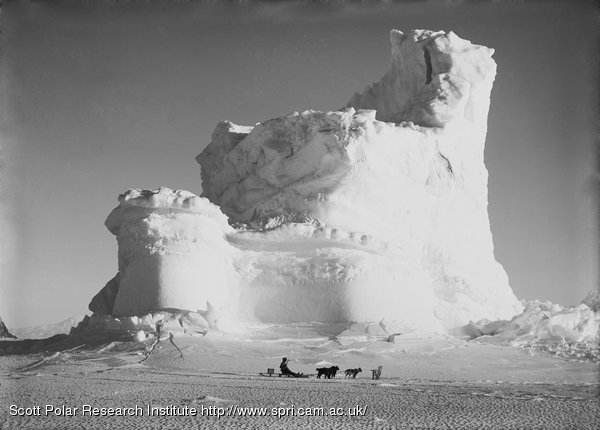
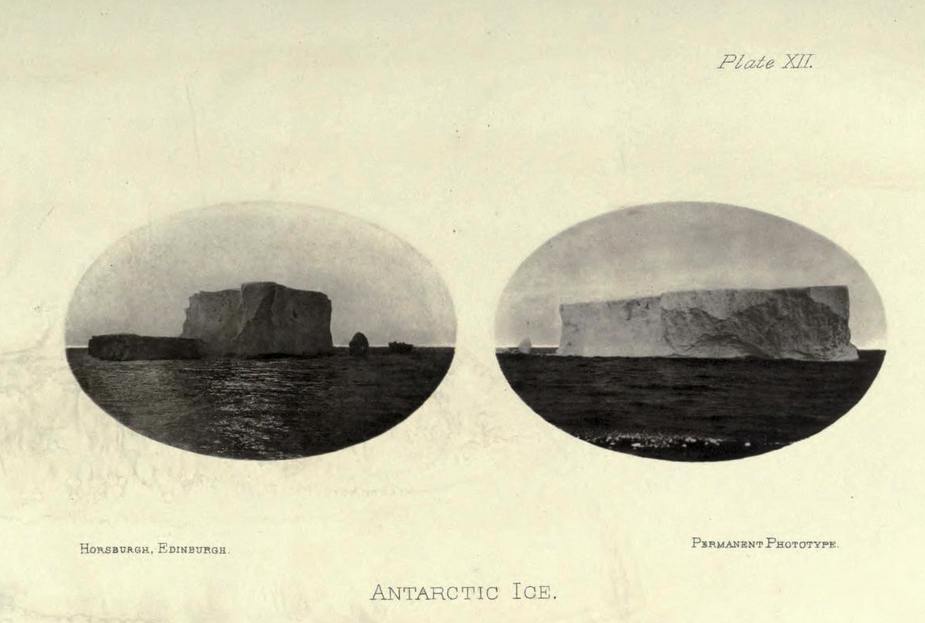
The elegant formations of icebergs had often been described by explorers in architectural terms, and Ponting’s photographs are some of the most successful at capturing this perspective.3 One of his most frequent subjects was the “Castle berg.”

Caslte Berg, with a dog team in the foreground. From SPRI.

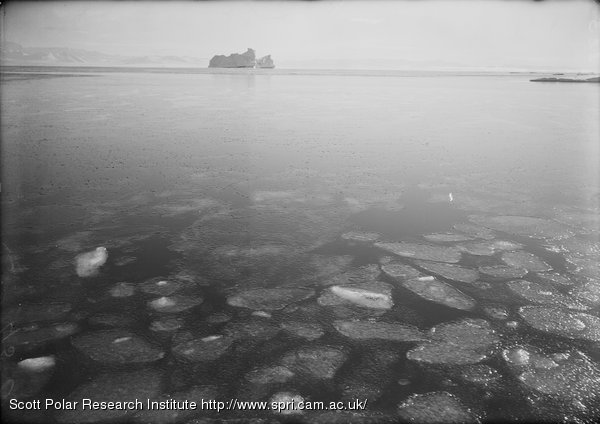
Ponting also documented the formation of “pancake ice,” describing how small crystals coalesced into larger discs of ice. These discs grew very quickly into large sheets of ice that became ice floes. He managed to take a series of photographs showing the formation of these ice features.

The various stages of pancake ice. From SPRI.

The ice, the whales, seals, and penguins took up most of Ponting’s attention in the early days of the expedition. Teams of scientists had been dispatched in various directions, while Ponting stayed behind with the rest of the crew. In the next post, we will catch up with these teams, who investigated emperor penguin colonies and Antarctic geology. 

Footnotes

  1. Quotes and information on Herbert Ponting comes primarily from his book The Great White South: being an account of experiences with Captain Scott’s South pole expedition and of the nature life of the Antarctic
  2. For more, see James R. Ryan, Photography and Exploration
  3. Kirsten Hastrup, “The Ice as Argument: Topographical Mementos in the High Arctic,” The Cambridge Journal of Anthropology, Vol 31, No 1 (2013), pp. 51-67

Photography and Science in Antarctica – Introduction – Herbert Ponting

This is a short introduction to a planned series of posts about photography and science on the British Antarctic Expedition. It includes another story about photographing orcas and ice

In 1910, the British Antarctic Expedition set out on the Terra Nova with the goal of being the first people to reach the geographic south pole. Captain Robert Falcon Scott organized and led the expedition–the second Antarctic voyage in his career. The Terra Nova expedition is now famous for being beaten to the pole by Roald Amundsen, and for the tragic deaths of Scott and the polar team on their return journey. But the story of the Terra Nova is also a story of scientific research. Captain Scott recruited a team of scientists and made their work a top priority, which may have been one factor in their second-place finish at the pole. Scott also personally recruited the man that would capture everything on film: Herbert Ponting.

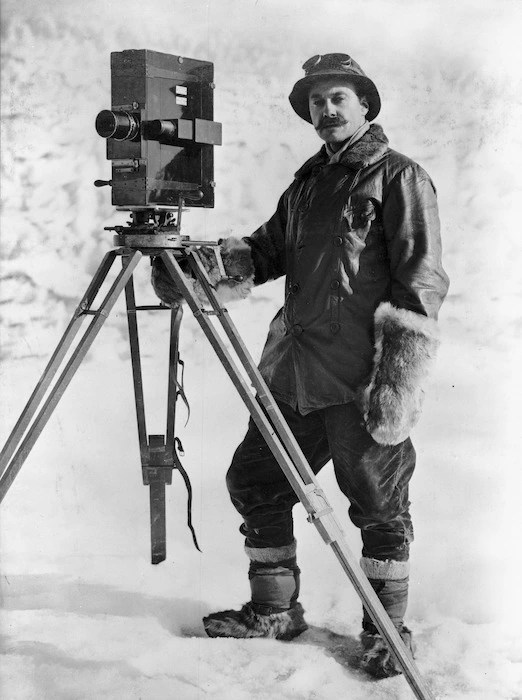
Herbert George Ponting and cinematograph, Antarctica. Kinsey, Joseph James (Sir), 1852-1936 :Photographs relating to Antarctica and mountaineering. Ref: PA1-f-067-067-2. Alexander Turnbull Library, Wellington, New Zealand. /records/23244038

Ponting was already a rather accomplished photographer when Scott approached him in 1909. He was on the verge of publishing a travel book about his experiences in Japan, but Scott convinced Ponting to go to the frigid wastes of Antarctica within a year of their first meeting. Scott’s emphasis on science was a major draw for the photographer. The expedition was, in Ponting’s words: “a chance, such as never would come to me again, to turn the experience I had gained to some permanent benefit to Science.” Over the course of the expedition, Ponting used his extensive experience to document animal life and monumental ice formations, and to immortalize on film the mountains and the men of Antarctica.

In his photographs, Ponting distilled the notion of the heroic male explorer. This archetype defined exploration the late nineteenth and early twentieth centuries. Travel narratives and photographs from these men were major commercial successes, and Ponting’s photographs even used the archetype to advertise beans. The idea of polar exploration as an act of masculine heroics has haunted Antarctic science into the 21st century. The Antarctic science community has struggled to move away from this old paradigm and create a safe and welcoming environment for scientists to do work that many dream of for their entire lives.

Captain Scott, from the Scott Polar Research Institute
An advertisement for Heinz, from the Scott Polar Research Institute.

Ponting very carefully arranged his photographs of the crew in ways that were specifically designed to conjure these “heroic” notions of the explorer and the scientist. But the images also give us insight into the scientific work done by the crew of the Terra Nova expedition. The scientific team was led by Dr. Edward Adrian Wilson, who the crew affectionately called ‘Uncle Bill.’ He was a capable zoologist, and both Ponting and Scott write about him with effusive admiration. Scott and Wilson also recruited a meteorologist, a physicist, and several geologists (one of whom was Raymond Priestly, a veteran of an early Shackleton expedition).

The scientists brought with them a wide variety of supplies and scientific instruments. These included a number of thermometers, telescopes, chemical glassware, and even balloons. Once in Antarctica, the expedition set up several laboratories, including a dark room. Ponting also took photographs on the Terra Nova, and had a photographic lab integrated into the ship. It was roomier than his assigned bunk, and the photographer ended up sleeping there under the light cast from the ruby-glass porthole.

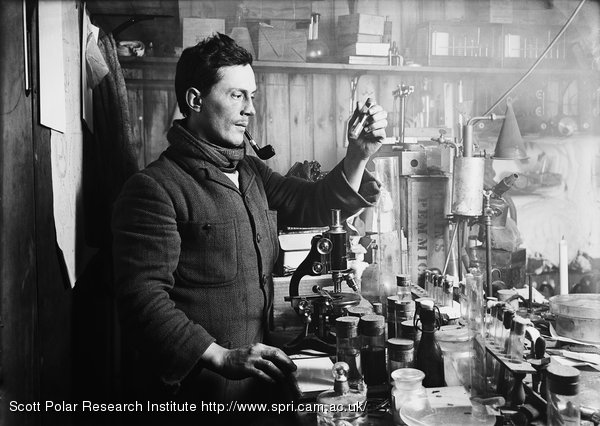
Dr. Atkinson in the lab. From the Scott Polar Research Institute.

Ponting brought with him “an incredible quantity of gear.” This included tin cases full of film and photographic plates, which were hermetically sealed in tins to prevent damage. There were also color filters and telephoto lenses. The crew brought several small cameras, and Ponting gave some lessons on how to use the equipment. Ponting himself primarily used a pair of cinematographs to take films, and folding cameras for stills.

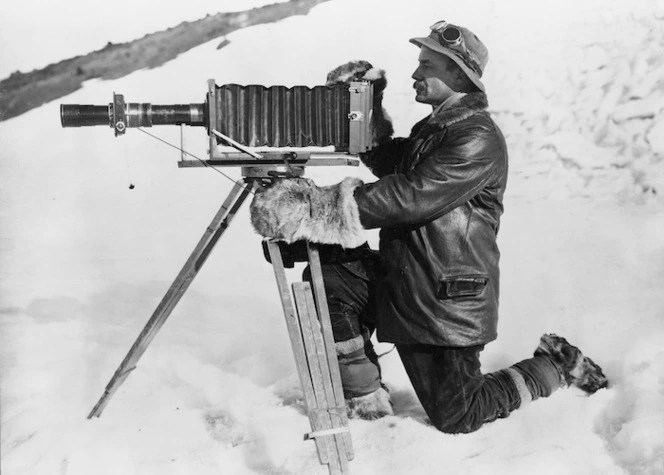
Herbert George Ponting and telephoto apparatus, Antarctica. Kinsey, Joseph James (Sir), 1852-1936 :Photographs relating to Antarctica and mountaineering. Ref: PA1-f-067-067-3. Alexander Turnbull Library, Wellington, New Zealand. /records/22514241

Read the next post about photographing orcas and ice. Subscribe here:

History Highlights 3: Mapping the Ocean and the Moon, Living Museums, Ancient Arctic Voyages

Welcome to Inverting Vision, a blog about the history of exploration, science, and technology. From this point forward, I will be publishing posts every Thursday unless fate intervenes. History Highlights will appear occasionally as I work on more substantial posts. Next week I’m hoping to write about the scientific instruments that appear in Herbert Ponting’s photographs of the British Antarctic Expedition. Until next week, here are some highlights from my readings and the wider exploration and science community.

Do we know more about space than the deep sea?

Probably not these days, according to marine scientists Alan Jamieson, Premu Arasu, and Thomas Linley. In a fantastic article in The Conversation, they write that the truth of this notion depends on what comparisons you make. They explain that if you just consider the Moon, it may have been true during a small window in the 1950s and 1960s. In fact this may have been when the impression that we know more about space than the oceans originated. In those decades scientists were mapping the Moon more extensively, especially as NASA prepared for the Apollo landings. The Surveyor and Lunar Orbiter missions played a key role in this process, taking photographs of the lunar surface that were used by scientists and Apollo mission planners.

A photograph of the far side of the Moon from Lunar Orbiter 3. From NASA/LOIRP.

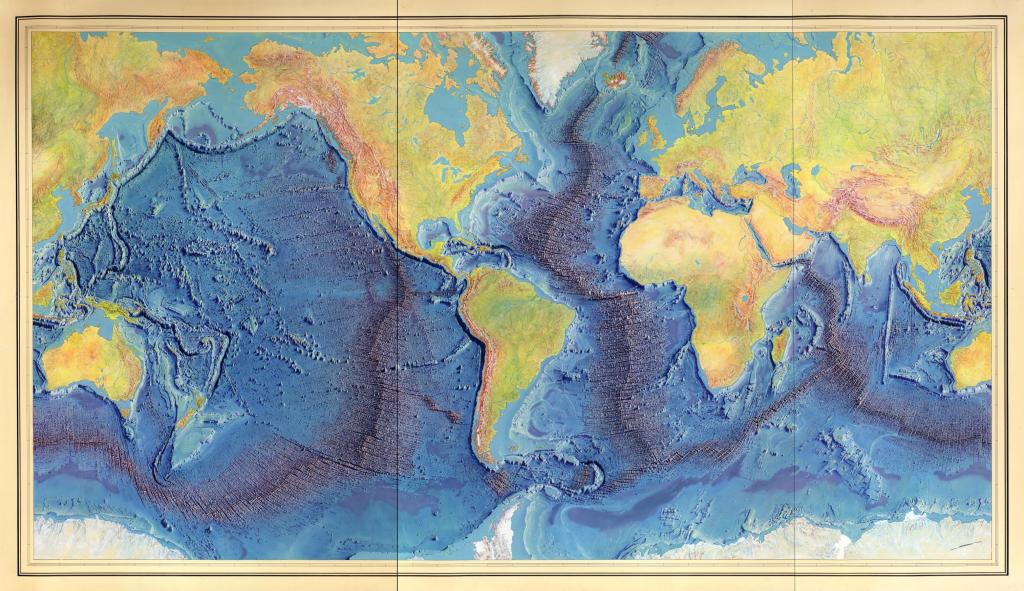
But this same period was very early in the history of fruitful deep sea oceanography. Echo sounding tech had only been in use for a few decades, and scientists were just starting to use echo sounding to map the seafloor (the first truly comprehensive map wasn’t published until Marie Tharp’s map in 1977). The authors of the article argue that since then, more robust exploration of the deep sea has produced a wealth of knowledge that probably surpasses our knowledge of the Moon and especially Mars. Go read their article to learn more.

A painting of Marie Tharp’s map by Heinrich C. Berann. From the Library of Congress.

In my experience, people casually referring to this idea often extend it to saying that we know more about “space” than the ocean. This must be even farther off the mark, even when you just consider objects in our solar system and disregard exoplanets. Europa and Enceladus may contain entire oceans that we know very little about. I’m looking forward to the launch of the Europa Clipper mission in 2024, which will hopefully bring us more information about Europa (although it won’t arrive at Jupiter until 2030).

Alvin and the Recovery of a Broken Arrow

Woods Hole tweets about the role DSV Alvin played in the 1966 recovery of a hydrogen bomb (referred to as a “broken arrow”) from the bottom of the Mediterranean.

Missions for the military were relatively common in the early days of deep-submergence vehicles, and especially for Alvin. The scientists were sometimes able to tack on scientific objectives to these missions, or military missions became a way to test or fund the development of vehicles and scientific projects. The relationship between the military and deep sea exploration will probably be a topic for a future blog post.

The Curious Life of the Vema

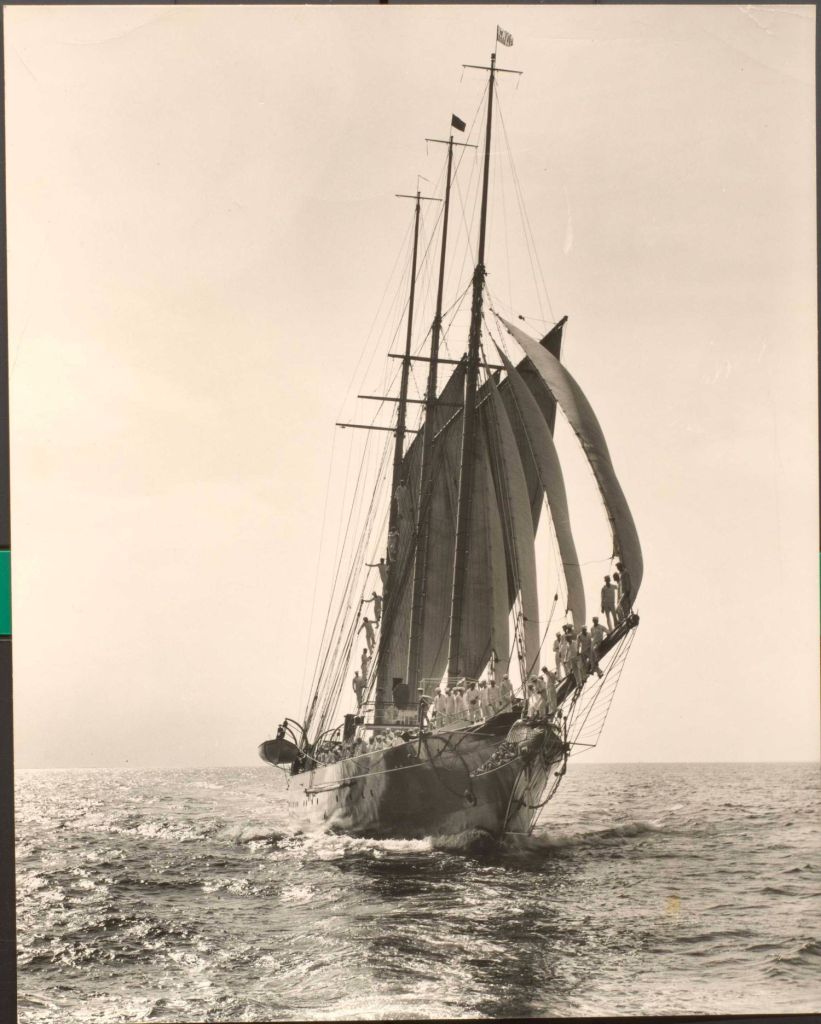
The Vema was an oceanographic research vessel that played a crucial role in the early mapping of the ocean floor and exploration of the Mid-Atlantic Ridge in the 1950s. Marie Tharp and her research partners used data from the Vema to create the seafloor map mentioned earlier. But that was only one small chapter in the life of the Vema. The sailing vessel was built in the 1920s for a wealthy American financier who used it as a yacht and hosted actors and celebrities. He sold the yacht to a Norwegian buyer who gave it the name Vema. Then the US military acquired the Vema in WWII and used for training. After the war the military discarded it, and eventually it was recovered and sold it to Columbia University, where it was used as a research vessel until the 1980s. Since then, it has been a chartered yacht for vacations in the Caribbean. Last year the yacht company announced they had new plans for the ship formerly known as Vema. They haven’t revealed what the new plans are.

The Vema being used as a training vessel in World War II. From Wikimedia.

Whales as Living Museums

Bathsheba Demuth writes about the role of whales in the history of Beringia in her book Floating Coast. She describes how bowhead whales were hunted by various groups throughout the history of the region. Sometimes the whales escaped these hunts with harpoons still buried in their bodies. Because bowhead whales can live for over 200 years, they sometimes collected a decent number of the tools used against them. Demuth describes a particular whale that carried “a museum of old weapons in his flesh.” These weapons ranged from ivory harpoons to explosive lance tips.

Ancient Voyage to the Arctic

It’s possible that in the 4th century BCE a Greek explorer named Pytheas ventured as far as the Arctic north of Europe, but later classical writers seriously doubted his claims. We know about him from later writers like Strabo and Polybius. In the Histories, Polybius recounts with skepticism Pytheas’ claim that in the far north “there [was] neither unmixed land or sea or air, but a kind of compound of all three (like the jelly-fish or Pulmo Marinus [sea lung]), in which earth and sea and everything else are held in suspense, and which forms a kind of connecting link to the whole, through which one can neither walk nor sail.”(Plb. 34.5) Voyages this far were rare for the Greeks, and Polybius was in part doubtful about how far Pytheas claimed to have sailed.

For more History Highlights from past weeks, click here. Follow the Inverting Vision Twitter account for updates on posts and other history of exploration and science content. Subscribe to get update in your inbox:

I strive to make my writing as accurate as possible. If you have a correction or a suggestion for a post, please leave a comment or email me at invertingvision@gmail.com. If you liked this post, please share it!

History Highlights 2: FLIP, Challenger, Demons, and Kepler

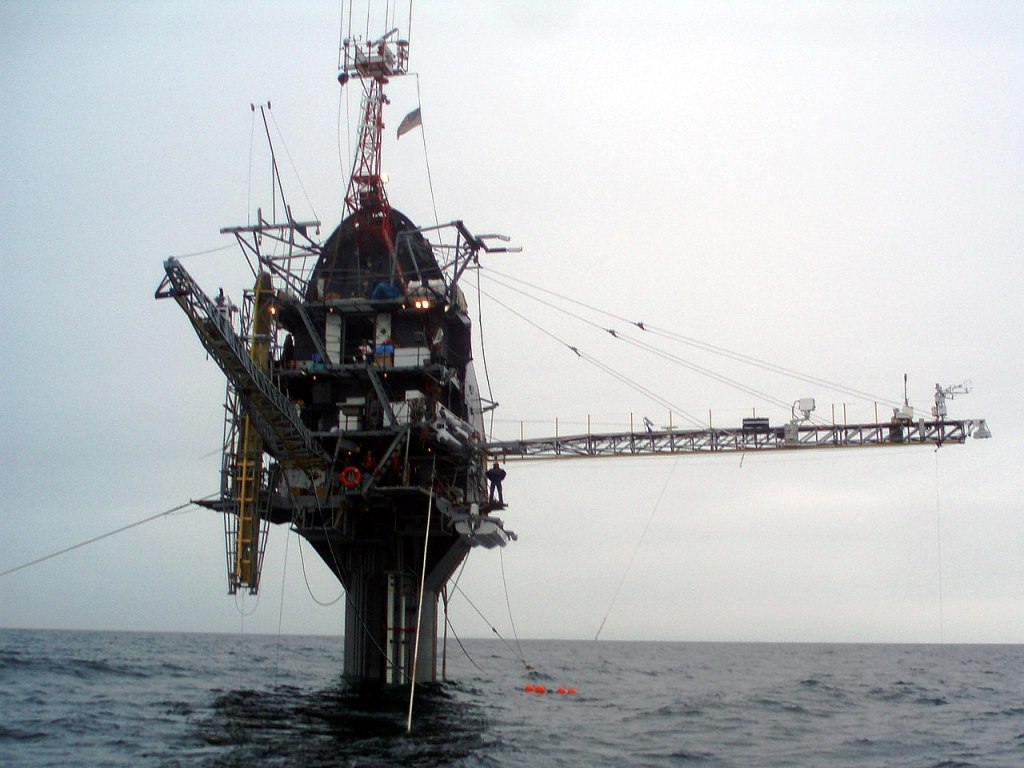
FLIP in vertical orientation for research on waves.

FLIP, Laboratory at Sea

Stefan Helmreich writes about FLIP (FLoating Instrument Platform), a  fascinating vessel designed for oceanographic research. First launched in 1962, it has the unique ability to change orientation, immersing most of its structure into the ocean to become a buoy. This provides a relatively stable platform for research, and the ability to do semi-controlled experiments on waves. It is an example of how the distinction between the laboratory and the field is sometimes blurred, in part due to technology.


You can read more of Helmreich’s analysis in Media+Environment and ISIS.

Looking Back on InSight and Phoenix on Mars

Mars InSIght is gathering dust on Mars, and its days are numbered. The robotic mission has been an enormous success, contributing to our understanding of Martian geology and natural history. NASA has an excellent retrospective on the major scientific achievements of the InSight lander.

Around this time of year in 2008, the last signals were received from the Phoenix lander. Like the InSight mission, Phoenix lasted beyond its mission parameters, and eventually succumbed to the elements. NASA also has a short history of the Phoenix lander. 

Photographs From the HMS Challenger

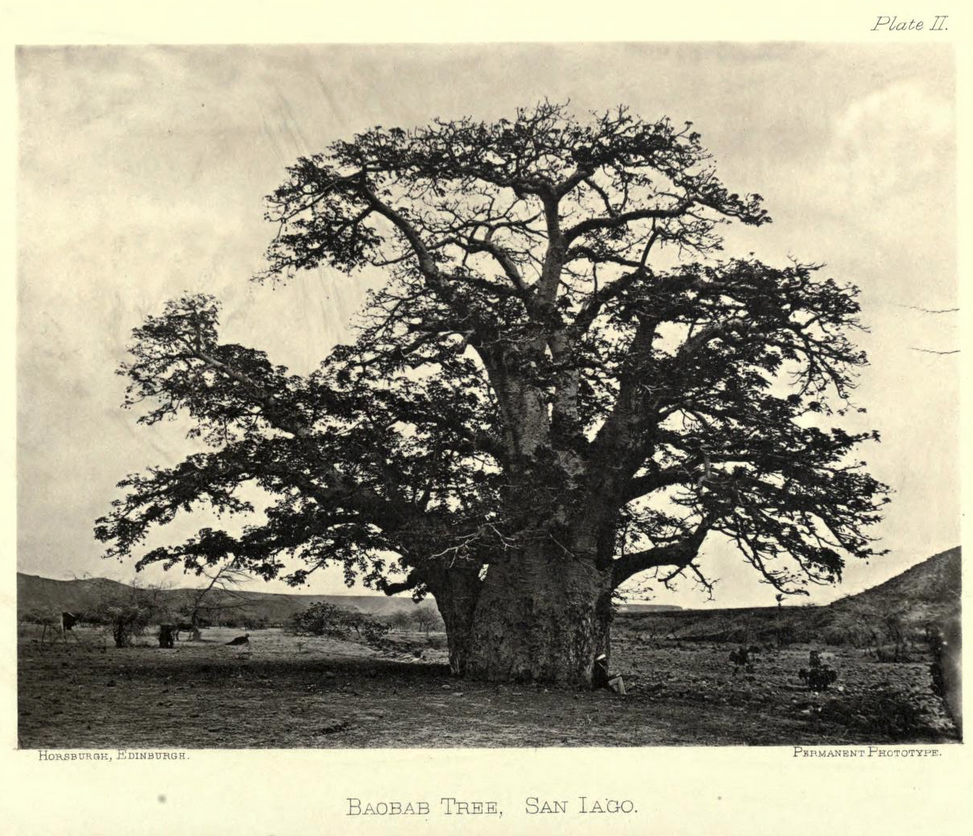
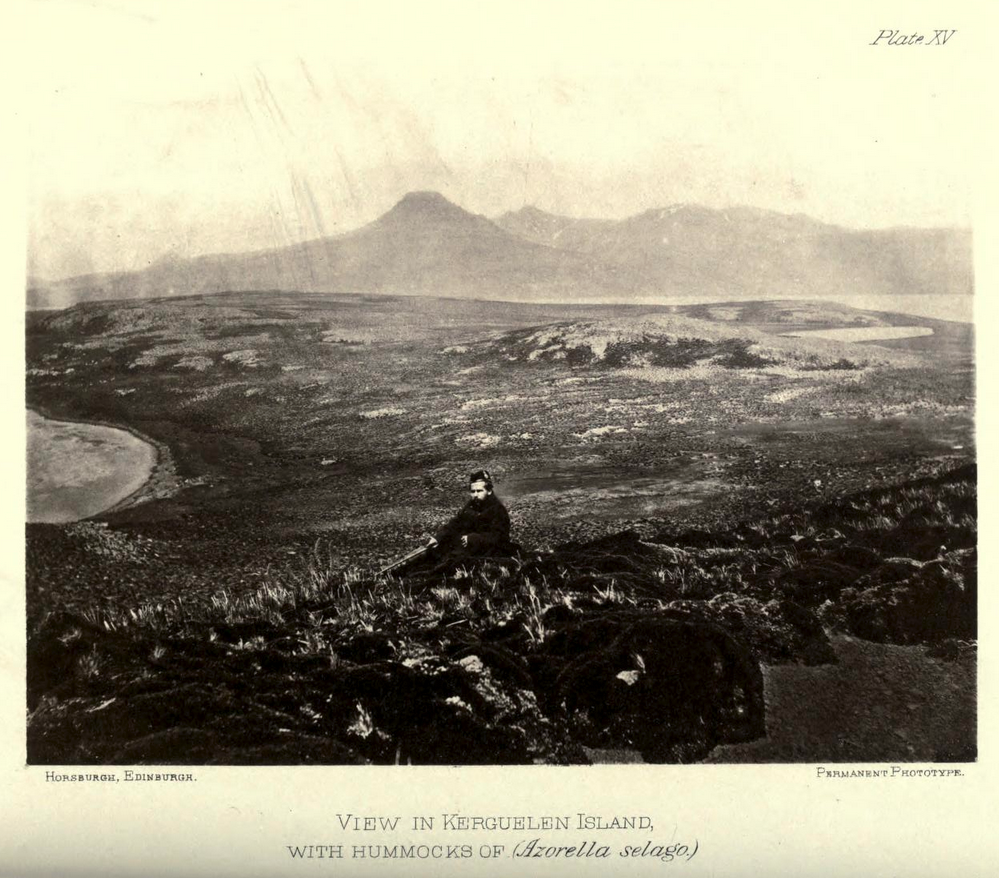
The HMS Challenger expedition helped kickstart the discipline of oceanography. The voyage is a monumental saga in the history of science and the history of exploration. It also played an important role in the history of photography. Not much is known about the photographers and the equipment they used. I was able to find a letter to the editor in an 1875 issue of Nature, referencing a new type of dry photographic plate. The letter was written by Henry Stuart Wortley, and seems to imply that a collodion process was used, including a combination of wet and dry plates. I want to investigate this further, but for now, here are a few of my favorite photographs from the official narrative of the expedition:

The Place of All the Demons

In the 1940s and 1950s, scholars were starting to think seriously about how to create artificial intelligence. They wrote papers and met regularly to discuss things like neural networks and machine learning. Oliver Selfridge was an important part of this conversation, and contributed to a number of early breakthroughs in thinking about artificial intelligence. One of these was a pattern recognition model that laid the foundations for computer image processing.

He imagined each node in the network as a hierarchical group of “demons” each assigned to recognize certain patterns, and to shout out when they recognize something like their assigned pattern. He wrote that each demon might “be assigned one letter of the alphabet, so that the task of the A-demon is to shout as loud of the amount of ‘A-ness’ that he sees in the image.” Then a demon at the top of the hierarchy listens to all the shouting and picks out the loudest shout as the best interpretation of the image.

He called the model “Pandemonium.”

Additional Links:

The original paper.

The Quest for Artificial Intelligence, by Nils J. Nilsson

“A Waste Land of Famine and Despair”: Kepler’s Tortured Personal Life

I want to do a review of The Sleepwalkers by Arthur Koestler at some point. Until then, here’s a short bit about Kepler. Kepler’s personal life was just so absurdly tragic that it stood out to me.

According to Koestler, we get this stuff from Kepler himself, who wrote an incredibly detailed family history. Koestler dwells on it at length, providing a detailed glimpse into the background and mindset of his subject. Here’s a brief outline of Kepler’s life. All quotes here are from Koestler, and I think some of them reveal his talent for colorful description.

  • “Johannes Kepler’s father was a mercenary adventurer who narrowly escaped the gallows. His mother, Katherine, … was brought up by an aunt who was burnt alive as a witch, and Katherine herself, accused in old age of consorting with the Devil, had as narrow an escape from the stake as the father had from the gallows.”
  • When Kepler was about three years old, his parents both left to fight Protestants in the Netherlands, despite being Protestant themselves. Kepler was left with his grandparents. His father went on two more trips, then disappeared.
  • He had six siblings, “of whom three..died in childhood, and two became normal, law-abiding citizens. But Heinrich, the next in age to Johannes, was an epileptic and a victim of the psychopathic streak running through the family.”
  • “Johannes was a sickly child, with thin limbs and a large, pasty face surrounded by dark curly hair. He was born with defective eyesight…his stomach and gallbladder gave constant trouble; he suffered from boils, rashes, and probably from piles, for he tells us that he could never sit still for any length of time and had to walk up and down.”
  • When he was four, he contracted smallpox and nearly died.
  • He compared himself to a dog constantly, even saying he had an aversion to bathing.
  • “Kepler belonged to the race of bleeders, the victims of emotional haemophilia, to whom every injury means multiplied danger, and who nevertheless must go on exposing himself to stabs and slashes. But one customary feature is conspicuously absent from his writings: the soothing drug of self-pity, which makes the sufferer spiritually impotent, and prevents his suffering from bearing fruit.”
  • Kepler’s first wife “resented her husband’s lowly position as a stargazer and understood nothing of his work.” He describes her in extremely bitter terms after she died at thirty-seven. Three of their five children died very young.
  • He had seven children with his second wife, “of whom three died in infancy.” Koestler presumes that his relationship with her was better than with his first wife, since he doesn’t write about her very much.
  • He was forced into virtual itinerancy in his last years, while trying to get some of his works printed. He spent ten months away from his family, and “was again plagued by rashes and boils; he was afraid that he would die before the printing of the Tables was finished; and the future was a waste land of famine and despair.”
  • After the struggles with publishing, he had difficulty obtaining payment for his work and accessing money owed to him. “He had money-deposits in various places, but he was unable to recover even the interests due to him. When he set out on that last journey across half of war-torn Europe, he took all the cash he had with him, leaving Susanna and the children penniless.”
  • He ended up in Ratisbon to try to get payment from the Emperor, but contracted a fever and died there in 1630.


And then there’s this quote from Kepler’s self-description that I quite identify with:

“In this man there are two opposite tendencies: always to regret any wasted time, and always to waste it willingly.”

Links:

The Sleepwalkers: A History of Man’s Changing Vision of the Universe, by Arthur Koestler

History Highlights 1

File:SS Sirius (1837).jpg
The SS Sirius, an early steamship

Math and Mining in the Ore Mountains

Deep in the heart of Central Europe, near the border of Saxony and Bohemia, lie the Ore Mountains. Rich in minerals, the Ore Mountains played a central role in the development of European metallurgy. They are home to some of the first European mining operations, and the inhabitants have been mining tin and silver there since the Pre-Classical Era.

For millennia, the region has attracted people looking to make a living. In the 16th century, as truly large-scale mining operations were underway, Georg Agricola arrived in the mining town of Chemnitz. He had just completed his university education, and took on a job as the town physician. He was somewhat out of place–an educated humanist living in a town of people who worked with their hands.

Agricola became deeply involved in the town, eventually becoming the mayor. And during that time, he attempted to apply his university education to the mining industry, writing on geology and mineralogy. He left us with De Re Metallica, a detailed account of metallurgy in the 16th century. It delves into geometry, and the applications of mathematics to planning and executing mining operations.

How much did this mathematical theory influence the actual mining practices of the time? According to historian Thomas Morel, not much. 

I think many people, including myself, have a tendency to think of the Scientific Revolution and the Industrial Revolution as connected. To some extent they were related, but Morel does a fantastic job of disentangling the theoretical from the practical, the scholar from the practitioner. 

It’s a difficult job, because the practitioners unfortunately don’t leave us a lot of direct descriptions of their work. To figure out the real-world practices at the time of Agricola, Morel looks to sources like mining laws and sermons in mining towns. These are indirect evidence, but are much closer to the daily lives and practicalities of mining than the writings of a Humanist physician.

In De Re Metallica, Agricola focuses on theoretical ideas about practices like determining where to dig a vertical shaft so that it intersects with a tunnel. These descriptions are complete with diagrams showing similar triangles.

Morel suggests that the actual topography of the Ore Mountains makes this idealized case impractical. He looks to diagrams from actual surveyors, and eventually to a sermon about why Martin Luther was awesome. 

This is a phenomenal piece of history. Apparently, a sermon by Cyriacus Spangenberg “included a detailed description of this specific surveying procedure that took up four pages.” If you’ve ever been to a Lutheran church, long sermons and extended religious analogies will be familiar. Apparently they have a long tradition, and thankfully for historians, can provide a glimpse into the actual lives of common people.

Morel argues that the practices revealed by these sources differ significantly from those described in De Re Metallica. “Taking Agricola’s words for granted,” Morel writes, “confuses his literary production with the practices of underground surveyors and hinders our understanding of both.” Surveying and mining practices were indeed advancing at this time, but not because the surveyors were reading Humanists and applying their theory.

So to some extent, the intellectual and practical worlds of 16th century mining were advancing along parallel, but non-intersecting paths. To me, this raises the question of how well this case study can be applied to other fields of science and engineering. But this case study was strong enough that I think it helps shift the burden of proof onto claims that scholarship influenced practice. 

Morel suggests that as far as any interaction happened between these two worlds, it was a subtle cross-fertilization. According to him, scholars and practitioners were always most interested in the task right in front of them. For Agricola, that may have been introducing new mathematical ideas to his audience (who were specifically not the miners he was writing about). For the surveyor, that was getting the job done efficiently. 

The extent and nature of this cross-fertilization is still something that is being explored in the History of Science. The perspective of the practitioners is more difficult to source, and has been somewhat neglected until recently. The relationship between these two worlds is a somewhat open question, and I think it’s one of the more interesting areas of research. If you know of other attempts to tackle this topic, let me know in the comments.

Source:

Thomas Morel, “De Re Geometrica: Writing, Drawing, and Preaching Mathematics in Early Modern Mines,” Isis, Volume 111, no. 1 (2020) https://doi.org/10.1086/707640


The Incredible Power of Steamships

I recently read Neptune’s Laboratory: Fantasy, Fear, and Science at Sea by Antony Adler. In addition to having a fantastic title, it provides a wonderful overview of oceanography as a scientific discipline.

I might do a longer review on this book in the future, but Adler describes the reception of steam ships by 19th century journalists and the public, and I had to share it:

“…it was only upon the arrival of the first commercially viable transatlantic steamship, Sirius, in New York in April of 1838, that newspapers declared the successful ‘annihilation of space and time.’ When soon thereafter some early passenger steamships exploded, at great loss of life, journalists blamed these accidents on ‘a public mind’ that had become ‘completely infatuated with a wish to be borne in the twinkling of an eye’ from place to place.”

I love these glimpses into the perception of new tech throughout time. You see attitudes that seem very persistent across time periods and groups of people.

Source:
Antony Adler, Neptune’s Laboratory: Fantasy, Fear, and Science at Sea


Grey Flag Pirates

Sometimes the history of exploration blends with maritime history. This more general history provides essential context for the history of exploration, so sometimes I might succumb to the temptation to include something not strictly within the confines of the blog’s stated topics. In this case: the pirate officials of the Song Dynasty.

China had problems with piracy along their coast for a good deal of their history. Maritime trade has a tumultuous history in China, partly due to their geography. In The Boundless Sea: A Human History of the Oceans, David Abulafia describes the interesting and controversial way that the Song Dynasty dealt with pirates, by giving them cushy government jobs:

“As more traffic crossed the sea, the temptation to pirates grew exponentially, and convoy escorts were sometimes provided to protect merchant ships; a navy came into being…the corsair Zhu Cong, defeated in 1135, merged his fleet of fifty ships and 10,000 sailors into the Song navy; he was rewarded with the rank of admiral, and others followed the same course. A brief poem circulated:’if you wish to become an official, kill and burn and accept a pardon.’”

Of course, this sparked debate over whether such a policy actually encouraged more piracy. It reminds me a little about the distinction between white hat, black hat, and grey hat hackers.

Source:
David Abulafia, The Boundless Sea: A Human History of the Oceans


Ice Melt Archaeology

A complicating factor in the history of technology is the fact that people don’t always write about the technology they use. This means that a lot of tech is lost to us, unless we actually find physical examples.

An odd side-effect of climate change is that melting ice is revealing archeological treasure troves. One instance, reported in the Smithsonian Magazine, is the Lendbreen route in Norway. Melting ice in the mountain passes has uncovered sleds, skis, clothing and other artifacts from multiple eras.

You can follow the progress of the archeologists at the website Secrets of the Ice, and get updates on Twitter here.

Historical Preservation and the Wright Brothers

I visited Dayton, Ohio in the summers of 2016 and 2017. It felt like a pilgrimage of sorts, because in many ways Dayton is the Mecca of the aerospace history world. Recently, news emerged of the plan to demolish the Wright Brothers’ first bike shop. I figured it would be a good opportunity to write a little about Dayton, and in the process develop my thoughts on historical preservation in general.

To approach the question of historical preservation in Dayton, we need to understand why Dayton is significant in the history of aviation. Kitty Hawk, seemingly more so than Dayton, is inextricably linked in the public imagination with the Wright Brothers and the dawn of human flight. North Carolina even put it on their license plate. They’re “First in Flight!”

Kitty Hawk gets a lot of press, but in many ways the work that went on in Ohio was more important. Dayton was the hometown of the Wright brothers, and is where they sold bikes. It’s where they first played with toy helicopters that helped spark their interest in flight. It’s where they developed and tested the first heavier-than-air flying machines. And at least in my estimation, Dayton is where the most significant moment in early aviation history took place.

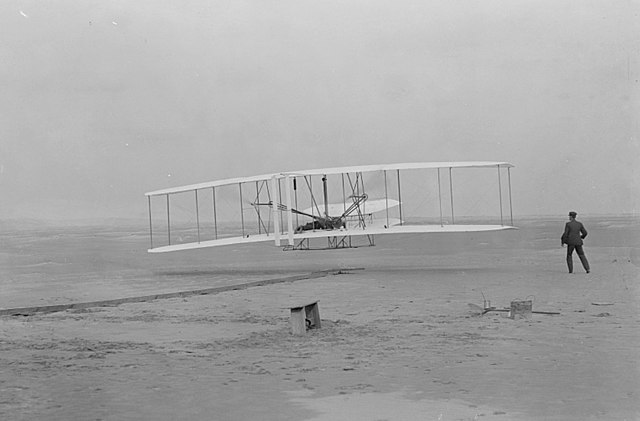
The test of the Wright Flyer I at Kitty Hawk was an incredibly important proof-of-concept for sustained, powered flight. They chose Kill Devil Hills because the strong winds made it easier to achieve the levels of lift they needed. They took off into the wind, meaning less work for the engines in generating the necessary air speed on the wings. But the brief distance covered by the Wright Flyer I, and the short amount of time it stayed in the air, does not distinguish it all that much from the other tests performed by the Wrights and their competitors.

The Wright Flyer I was in many ways a modified glider, given a bit of a distance boost by an engine, but unable to actually remain in the air for a long period. The Wright Flyer II gained more distance and air time. But to me, both vehicles were more like motor-gliders than anything else. They were incapable of staying in the air under their own power for sustained periods. Sustained flight is what humans dreamed about for millennia.

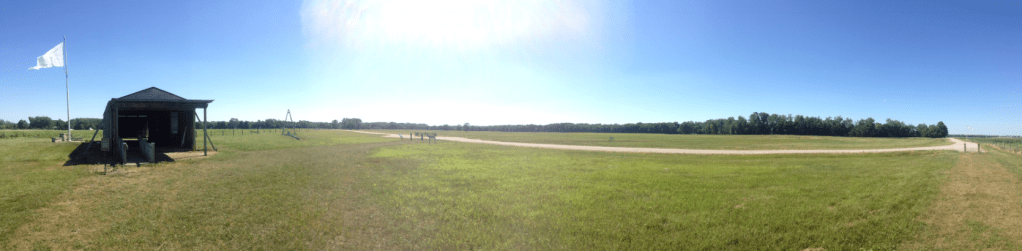
Sustained flight was first achieved in Dayton, Ohio. On an October day in 1905, Wilbur took to the skies in the Wright Flyer III. He circled around Huffman Prairie for almost 40 minutes, and most importantly — he landed on purpose, and only because he ran out of fuel. This was the first time humans really flew. And it happened in Dayton. When you read their descriptions of these flights, it becomes clear that the brothers only felt they had truly accomplished their goal with the Flyer III.

Whether or not you agree with me about the Huffman Prairie flight being more significant than Kitty Hawk, this is certainly a story worth preserving. The City of Dayton has a responsibility to this history.

Preservation is important, but it has limits. And before I dive into this, I have a confession – I’m an artifact hoarder. If there is some token of an event, some odd trinket or symbol of an experience, I hold on to it. I keep a lot of things that would normally be considered trash. For example, I keep a lot of receipts when I go on trips. These sorts of things are fascinating and valuable to me. A receipt holds a wealth of information and captures memories and moments that pictures can’t. 

If I could hold on to all of these things, I would. I realized pretty early that this could potentially be a problem, so I limited myself to one large box of artifacts. I have three boxes now. But despite this proclivity, I have forced myself to become more and more selective. Some artifacts actually represent important experiences or spark real memories of formative events, and those are the ones I try to prioritize. I’ve learned to let go of the merely interesting.

I come home from trips with a handful of receipts. But my artifact boxes contain maybe two or three in total. And the ones I kept have particular significance beyond just being interesting.

So although it pains me a bit to write–we don’t have to preserve every last piece of history. The world moves on, things change. If we never demolished a historic building, we wouldn’t have made new ones, we wouldn’t have made new stories and created new histories. We need to be thoughtful about what we preserve. Dayton is a great example of how to accomplish that, and the limits of those efforts.

There is a large collection of Wright Brothers sites in Dayton. I spent two summers there, and visited most of them. They have done a phenomenal job of preserving important aspects of the story that played out in Dayton, and providing the public with a way to explore that history. And it’s more than enough. 

You can spend entire days going from site to site, reading through the information, getting to spend time in the presence of Orville and Wilbur’s tools, prototypes, and personal effects. You can go to the Dayton Aviation Heritage National Historic Park. They have a number of incredible artifacts, including one of their cycle shops (they had six locations in total). You can even go to the library at Wright State University, and access a treasure trove of their personal journals and photographs (I did this and it was a spiritual experience). You can go to Huffman Prairie, and trace the path Wilbur took around the big, thorny honey locust tree. And you can go to Carillon Historical Park, and see the Wright Flyer III.

The Wright Flyer III was almost lost. An enormous effort went into preserving it and restoring it, led by Orville himself. To me, this preservation effort was absolutely worth it. That particular artifact is representative of one of the most monumental steps in human history. Being able to actually see it in person adds something ineffable to the story of flight. Walking into the large room that houses it feels like stepping into a temple.

The barely-standing remains of their first bike shop that moved after a year, before their work on flight really began, is an interesting place. It’s physical existence isn’t crucial to telling their story.

I would love to have a brick from the building though. I would even start a new box for it.