Updates

It’s been a while since my last post, so I wanted to get back to the blog with an update on what I’ve been working on, and what’s next in 2025.
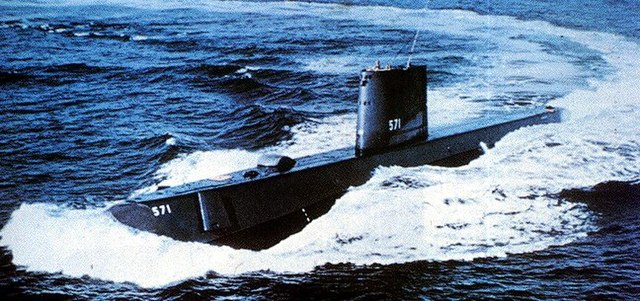
The USS Nautilus resurfacing. From U.S. Navy/Wikimedia.

This summer I was lucky enough to start working with JSTOR Daily as a regular contributor. JSTOR is a large digital repository of academic journals, and a valuable research tool. I was fortunate to have high school teachers who taught us how to use JSTOR and similar resources, and I used them extensively in college.

It was always exciting for me. These journals contain an ongoing conversation between the brightest minds in nearly every academic field. In some cases, those conversations stretch back centuries. On JSTOR, historical documents live side-by-side with cutting edge research.

Generally you get access to JSTOR through affiliation with an educational institution–college students usually get access with their university email. But there are also subscription options for independent scholars and individuals.

JSTOR Daily is an effort to both show off and share the treasures contained in their repositories. Every day, they post very short summaries of fascinating articles. They strive to make these relevant to current events, or to provide essential context to help understand the significance of the research. Each summary contains a link that provides free access to that article.

I’ve been covering a history of science and technology “beat” for JSTOR Daily. So far, it has been an incredibly fulfilling and instructive experience. Summarizing and contextualizing detailed academic articles in 500 words or less is an intriguing writing puzzle. Every time I sit down to write one, I remember a particular conversation with my dad about writing. He shared a famous remark that stuck with me: “I would have written a shorter letter, but I did not have the time.” (From Mark Twain? Now that I’m googling –  Blaise Pascal? Seems like a lot of writers have shared the same feeling.)

It’s helping me accomplish one of my main goals: to highlight and share the incredible work being doing by historians all the time.

You can find my author page here. I’m going to try to start posting on my Bluesky when a new post goes up, but I will also include links in future History Highlights. Here are a few of my favorites so far:

Additional update 2/13/2025:

Since this post, I have been primarily focused on my teaching, JSTOR writing, and other articles, including a new one in Aeon Magazine. However, I have also been doing research for some planned 2025 blog posts. If you’re interested in learning more about early lunar robotics (and musings on the history of scientific exploration and technology), let me know by subscribing to Inverting Vision below:

History Highlights 3: Mapping the Ocean and the Moon, Living Museums, Ancient Arctic Voyages

Welcome to Inverting Vision, a blog about the history of exploration, science, and technology. From this point forward, I will be publishing posts every Thursday unless fate intervenes. History Highlights will appear occasionally as I work on more substantial posts. Next week I’m hoping to write about the scientific instruments that appear in Herbert Ponting’s photographs of the British Antarctic Expedition. Until next week, here are some highlights from my readings and the wider exploration and science community.

Do we know more about space than the deep sea?

Probably not these days, according to marine scientists Alan Jamieson, Premu Arasu, and Thomas Linley. In a fantastic article in The Conversation, they write that the truth of this notion depends on what comparisons you make. They explain that if you just consider the Moon, it may have been true during a small window in the 1950s and 1960s. In fact this may have been when the impression that we know more about space than the oceans originated. In those decades scientists were mapping the Moon more extensively, especially as NASA prepared for the Apollo landings. The Surveyor and Lunar Orbiter missions played a key role in this process, taking photographs of the lunar surface that were used by scientists and Apollo mission planners.

A photograph of the far side of the Moon from Lunar Orbiter 3. From NASA/LOIRP.

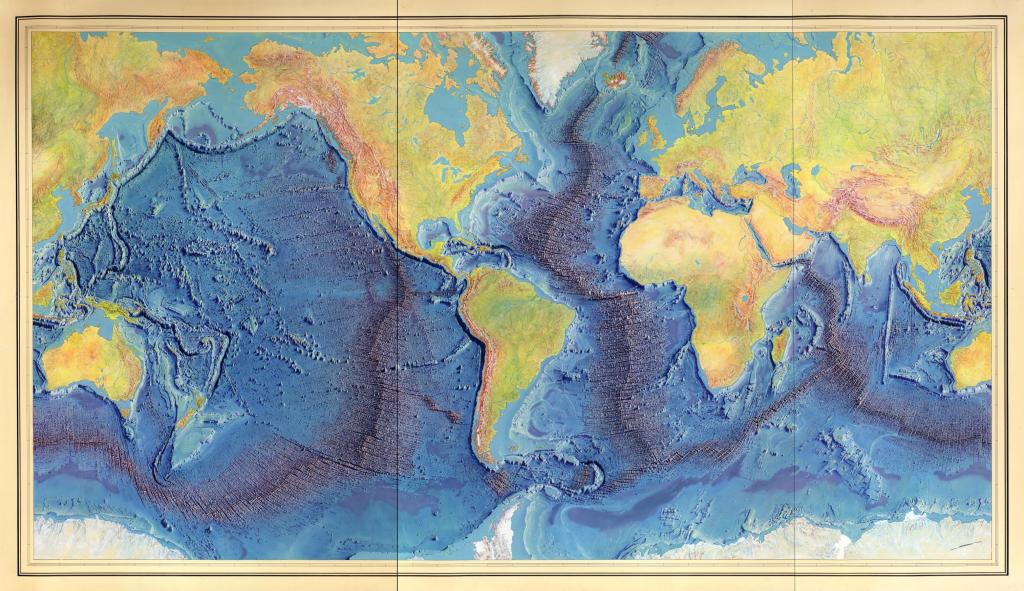
But this same period was very early in the history of fruitful deep sea oceanography. Echo sounding tech had only been in use for a few decades, and scientists were just starting to use echo sounding to map the seafloor (the first truly comprehensive map wasn’t published until Marie Tharp’s map in 1977). The authors of the article argue that since then, more robust exploration of the deep sea has produced a wealth of knowledge that probably surpasses our knowledge of the Moon and especially Mars. Go read their article to learn more.

A painting of Marie Tharp’s map by Heinrich C. Berann. From the Library of Congress.

In my experience, people casually referring to this idea often extend it to saying that we know more about “space” than the ocean. This must be even farther off the mark, even when you just consider objects in our solar system and disregard exoplanets. Europa and Enceladus may contain entire oceans that we know very little about. I’m looking forward to the launch of the Europa Clipper mission in 2024, which will hopefully bring us more information about Europa (although it won’t arrive at Jupiter until 2030).

Alvin and the Recovery of a Broken Arrow

Woods Hole tweets about the role DSV Alvin played in the 1966 recovery of a hydrogen bomb (referred to as a “broken arrow”) from the bottom of the Mediterranean.

Missions for the military were relatively common in the early days of deep-submergence vehicles, and especially for Alvin. The scientists were sometimes able to tack on scientific objectives to these missions, or military missions became a way to test or fund the development of vehicles and scientific projects. The relationship between the military and deep sea exploration will probably be a topic for a future blog post.

The Curious Life of the Vema

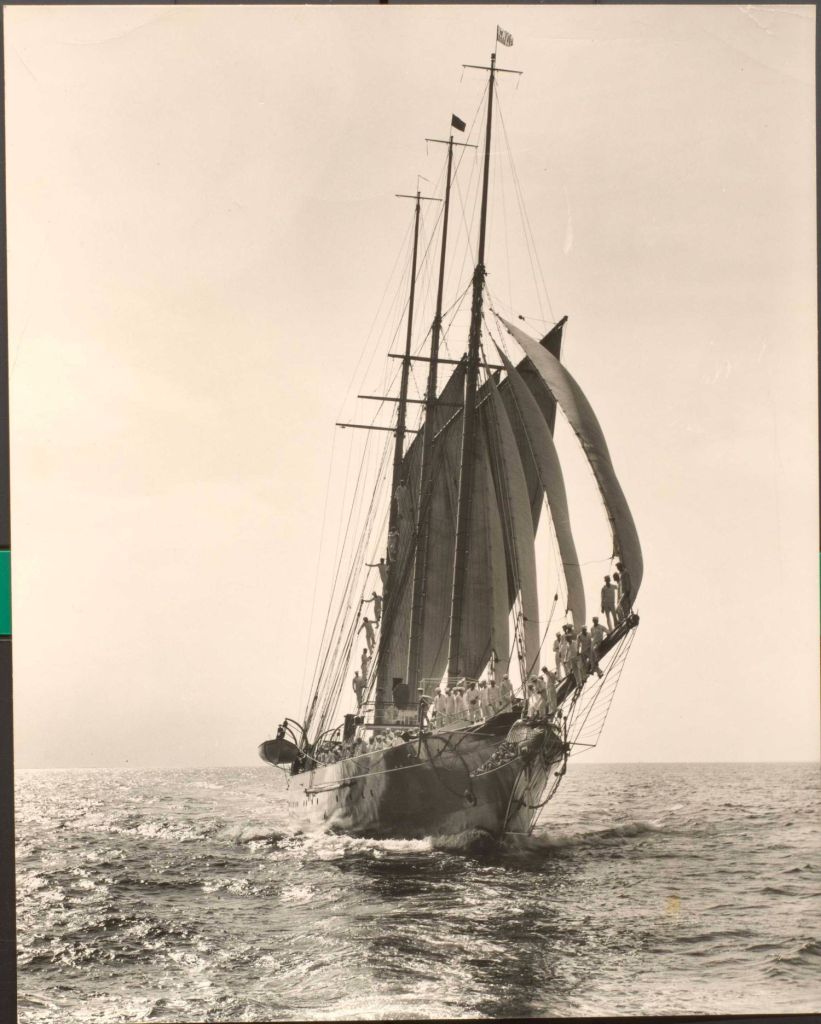
The Vema was an oceanographic research vessel that played a crucial role in the early mapping of the ocean floor and exploration of the Mid-Atlantic Ridge in the 1950s. Marie Tharp and her research partners used data from the Vema to create the seafloor map mentioned earlier. But that was only one small chapter in the life of the Vema. The sailing vessel was built in the 1920s for a wealthy American financier who used it as a yacht and hosted actors and celebrities. He sold the yacht to a Norwegian buyer who gave it the name Vema. Then the US military acquired the Vema in WWII and used for training. After the war the military discarded it, and eventually it was recovered and sold it to Columbia University, where it was used as a research vessel until the 1980s. Since then, it has been a chartered yacht for vacations in the Caribbean. Last year the yacht company announced they had new plans for the ship formerly known as Vema. They haven’t revealed what the new plans are.

The Vema being used as a training vessel in World War II. From Wikimedia.

Whales as Living Museums

Bathsheba Demuth writes about the role of whales in the history of Beringia in her book Floating Coast. She describes how bowhead whales were hunted by various groups throughout the history of the region. Sometimes the whales escaped these hunts with harpoons still buried in their bodies. Because bowhead whales can live for over 200 years, they sometimes collected a decent number of the tools used against them. Demuth describes a particular whale that carried “a museum of old weapons in his flesh.” These weapons ranged from ivory harpoons to explosive lance tips.

Ancient Voyage to the Arctic

It’s possible that in the 4th century BCE a Greek explorer named Pytheas ventured as far as the Arctic north of Europe, but later classical writers seriously doubted his claims. We know about him from later writers like Strabo and Polybius. In the Histories, Polybius recounts with skepticism Pytheas’ claim that in the far north “there [was] neither unmixed land or sea or air, but a kind of compound of all three (like the jelly-fish or Pulmo Marinus [sea lung]), in which earth and sea and everything else are held in suspense, and which forms a kind of connecting link to the whole, through which one can neither walk nor sail.”(Plb. 34.5) Voyages this far were rare for the Greeks, and Polybius was in part doubtful about how far Pytheas claimed to have sailed.

For more History Highlights from past weeks, click here. Follow the Inverting Vision Twitter account for updates on posts and other history of exploration and science content. Subscribe to get update in your inbox:

I strive to make my writing as accurate as possible. If you have a correction or a suggestion for a post, please leave a comment or email me at invertingvision@gmail.com. If you liked this post, please share it!

Studying Eels and the Ocean on Beer Money: The Dana Expeditions

In the rivers of Great Britain and western Europe lives an eel that was once at the center of a great scientific mystery. The European eel was frequently caught in nets or farmed in fisheries for centuries. Cookbooks featured them in a wide variety of dishes. But the origins of the eel were a mystery since no one had observed an example of a young eel. There are records speculating about their spawning and migration patterns going all the way back to Aristotle, who claimed that they came from earthworms (Aristotle, History of Animals 6.16). The mystery wasn’t solved until the 20th century when Danish researchers put together a series of voyages that ended with a circumnavigation of the world.

Illustration by Felice Supino (1916)

Dr. Johannes Schmidt was a Danish biologist who committed much of his career to studying these eels. Historian Bo Paulsen has written an overview of Schmidt’s career, describing him as “a forerunner of Jacques Cousteau.” Schmidt was a dedicated scientist with a keen awareness of public outreach. And in the early 20th century he established a name for himself in the world of biology and marine science.

Around the time Schmidt was building his career, an international community of scientists was flourishing. This community had been cultivated through international journals and direct communication between scientists around the world, and it was infused a spirit of healthy competition through fairs and exhibitions. But the outbreak of World War I threw the international scientific community into disarray. After the war, there was a desire amongst many scientists to rekindle the collaboration and scientific activity. This included prominent Danish scientists, who sought to resume research and collaboration in the post-war years.

It was in this moment that Johannes Schmidt began working with collaborators on a project to resolve the mystery of the European eel life cycle. Schmidt was a committed nationalist, however. He kept the prestige of Denmark in mind, which may have been part of his motivation for suggesting a circumnavigation project reminiscent of the Challenger expedition fifty years earlier. And so while one of his partners suggested making the project an international endeavor through the International Council for the Exploration of the Sea, it remained primarily a Danish endeavor.

Schmidt and his partners planned their expeditions with backing from the Danish government, the East Asiatic Company, and funding from the Carlsberg Foundation. The founder of the Carlsberg Brewery, J.C. Jacobsen was a prolific patron of science. He established the Carlsberg Research Laboratory with the goal of leveraging science to produce the best beer possible. It was (and continues to be) a dedicated research facility studying chemistry and biology that might have applications to the brewing process. He also founded the Carlsberg Foundation, Denmark’s first commercial foundation, to support the development of science more generally.

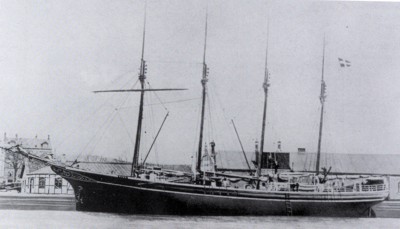
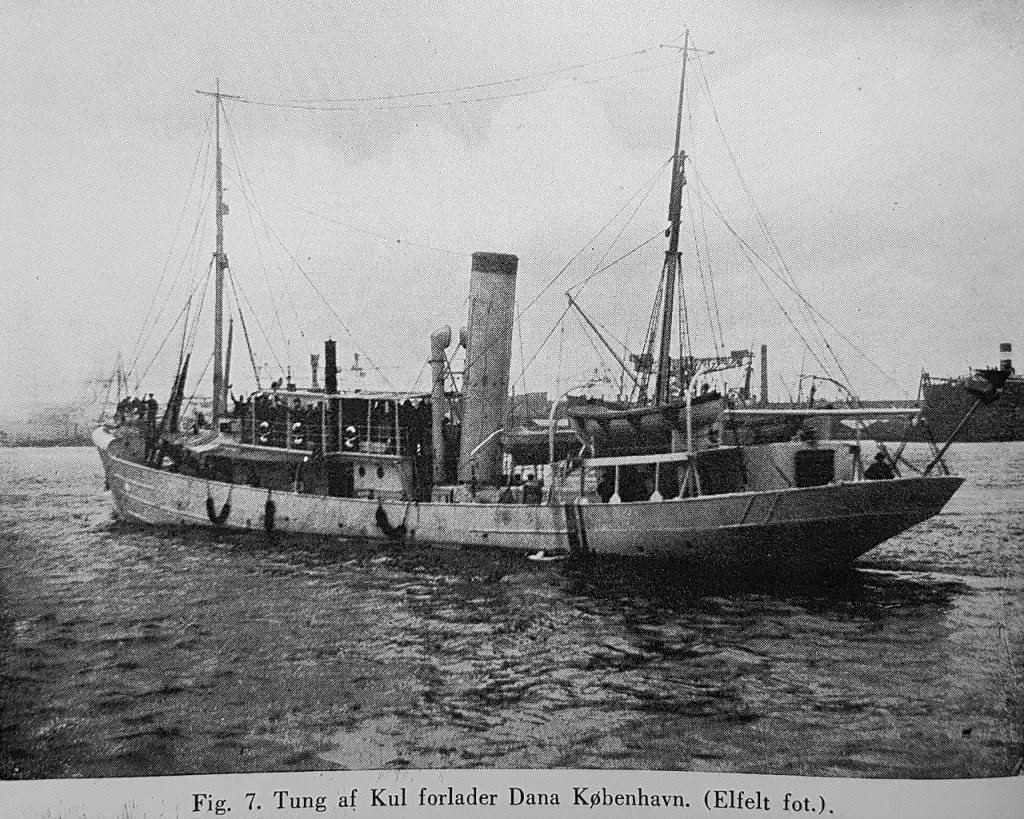
Johannes Schmidt had developed deep ties with the Carlsberg scientific network, which proved useful in funding the eel expeditions. With the support of the East Asiatic Company, Schmidt and his team were able to secure a motor schooner, the M/S Dana, equipped with an engine and four masts. The vessel was outfitted with winches and scientific instruments for collecting samples from deep ocean waters. The M/S Dana was used for the first two expeditions in the Atlantic allowing its crew to collect information about the distribution of eels. A second ship, the R/V Dana, was built for a third expedition and specifically designed for scientific research. The vessel was equipped with an electric winch driving a special phosphor-bronze wire rope 10 kilometers long, making it easier to collect samples from deep waters. To make depth measurements the ship with outfitted with echo sounding equipment, which was a relatively new technology at the time.These early Dana missions successfully recovered eel larvae and plotted their positions in the Atlantic–necessary data for solving the age-old puzzle of the European eel.

The M/S Dana, via Wikimedia
The R/V Dana, via Wikimedia

It turned out that the eels spawned deep in an area of the Atlantic Ocean known as the Sargasso Sea. This is an area of the Atlantic with strange properties that were first recorded by Christopher Columbus. The Sargasso Sea is encircled by four different ocean currents, leaving it effectively isolated from the rest of the ocean. Over time it has collected an enormous amount of seaweed (and now trash), which along with its position in the horse latitudes contributed to legends of ships disappearing in its waters. After spawning in the Sargasso, eels migrate to western Europe where they live out most of their lives.

A map from “The Breeding Places of the Eel” by Dr. Johannes Schmidt in Philosophical Transactions of the Royal Society of London, 1923

The Dana expeditions were a massive success for Schmidt and for Denmark, and eventually led to funding for further exploration. As is often the case, the new information led to more questions. The population of eels in other parts of the world could now be studied with a greater understanding of the eel life cycle. In a 1929 summary of the expeditions in Nature, these question were laid out:

“Why are eels plentiful throughout the western Pacific, but absent from all the eastern half of that ocean? Why are they present on both sides of the North Atlantic ocean, but absent from both sides of the South Atlantic? Why are they plentiful on one side of Australia and absent from the other?”

Nature, No. 3087, Vol. 122, Dec 19 1929 “The Dana Expedition”

In 1928 Schmidt’s vision of a circumnavigation became a reality. The final scientific voyage on the R/V Dana collected more information about eel spawning behavior in the Atlantic, bolstering Schmidt’s theory about the Sargasso sea spawning patterns. The expedition traveled through the Panama Canal into the Pacific Ocean, eventually finding eel larvae near Tahiti and providing insight into Pacific spawning patterns. The crew of the Dana then charted the distribution of eel species in the Indian Ocean before returning to Europe. Along their way they took a number other oceanographic measurements, including water temperatures and other oceanic conditions. A write-up in Nature even suggested that the strange spawning patterns of European eels lent support to the theory of continental drift (referred to as “Wegener’s theory of continental shifting”).

The technology used by the Dana reflects a transitional period in the history of oceanography. The sample collection methodology they used was in principle the same as those used in the 19th centuries–nets, cables, and winches. But they were also equipped with echo-sounding machines and short-wave radios for communication. The Dana expeditions had a lasting impact through their contributions to science and their public outreach–they are one part of a rich history of Danish marine science and the broader history of modern scientific research practices.

History Highlights 2: FLIP, Challenger, Demons, and Kepler

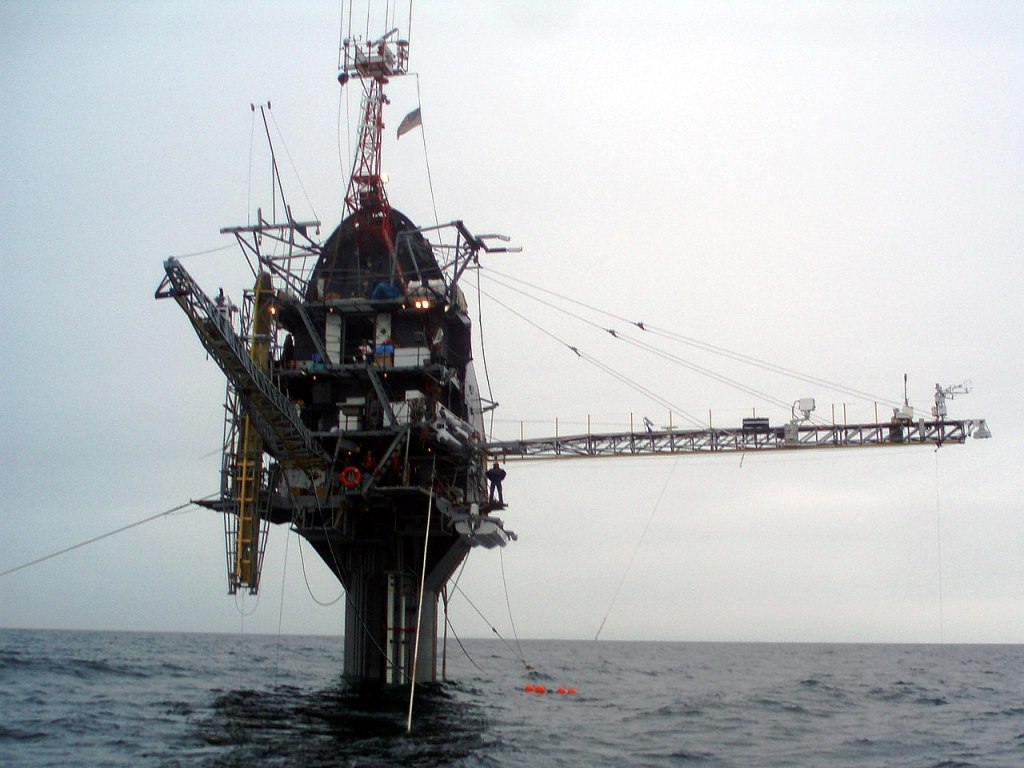
FLIP in vertical orientation for research on waves.

FLIP, Laboratory at Sea

Stefan Helmreich writes about FLIP (FLoating Instrument Platform), a  fascinating vessel designed for oceanographic research. First launched in 1962, it has the unique ability to change orientation, immersing most of its structure into the ocean to become a buoy. This provides a relatively stable platform for research, and the ability to do semi-controlled experiments on waves. It is an example of how the distinction between the laboratory and the field is sometimes blurred, in part due to technology.


You can read more of Helmreich’s analysis in Media+Environment and ISIS.

Looking Back on InSight and Phoenix on Mars

Mars InSIght is gathering dust on Mars, and its days are numbered. The robotic mission has been an enormous success, contributing to our understanding of Martian geology and natural history. NASA has an excellent retrospective on the major scientific achievements of the InSight lander.

Around this time of year in 2008, the last signals were received from the Phoenix lander. Like the InSight mission, Phoenix lasted beyond its mission parameters, and eventually succumbed to the elements. NASA also has a short history of the Phoenix lander. 

Photographs From the HMS Challenger

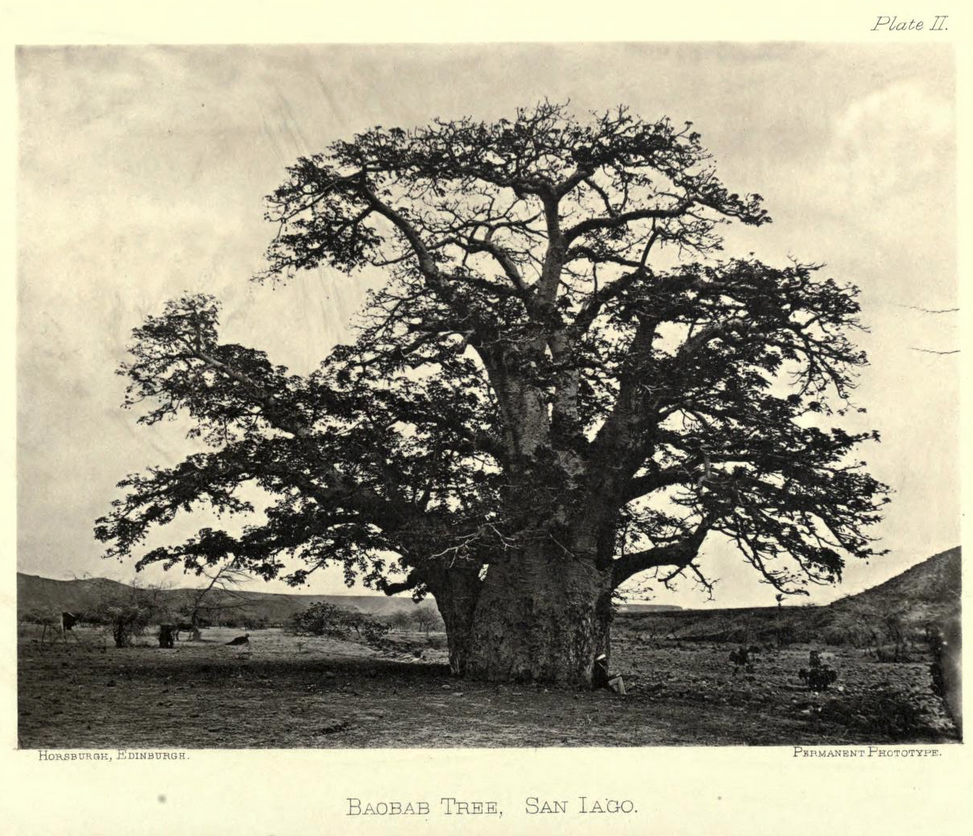
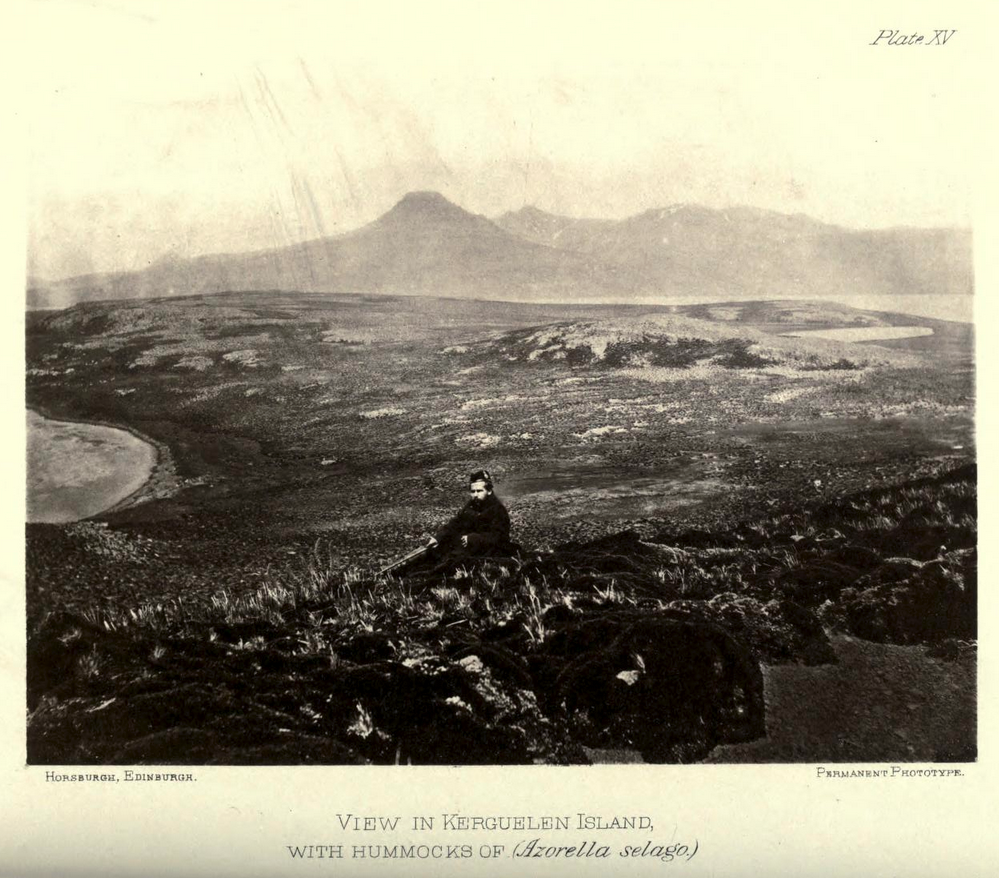
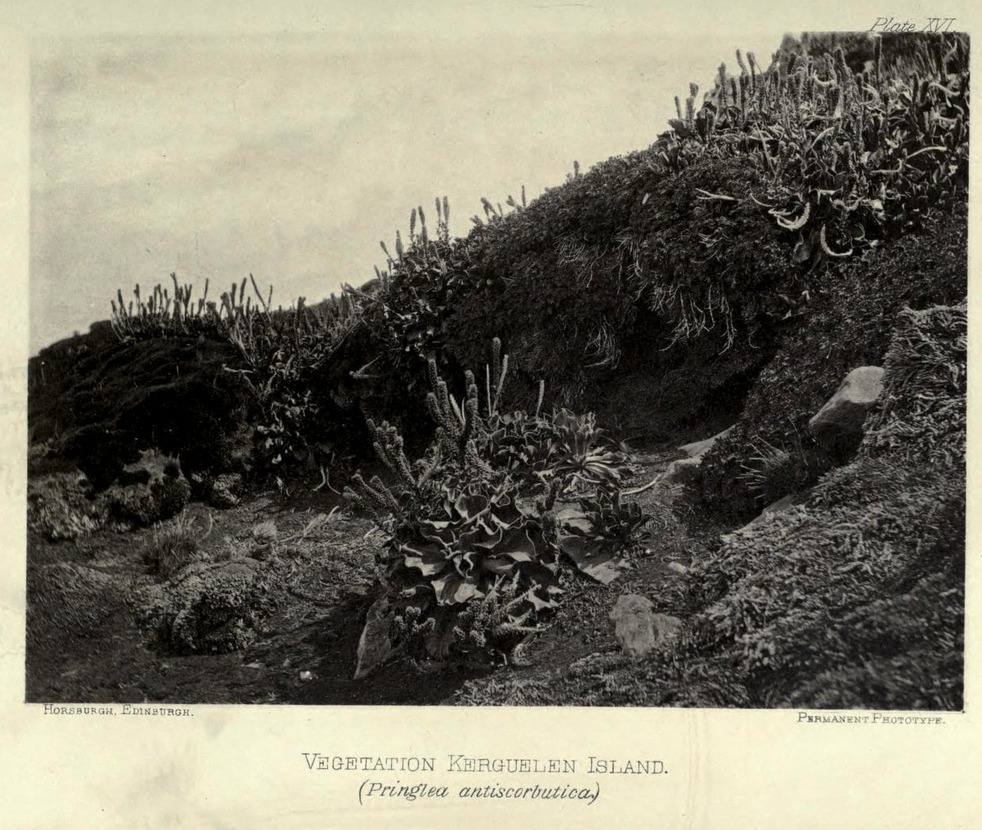
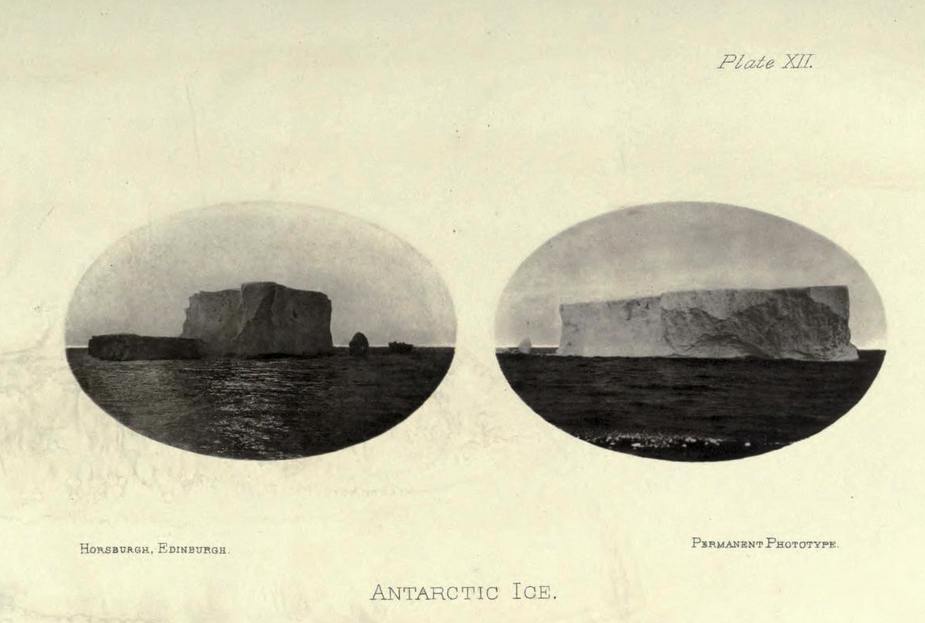
The HMS Challenger expedition helped kickstart the discipline of oceanography. The voyage is a monumental saga in the history of science and the history of exploration. It also played an important role in the history of photography. Not much is known about the photographers and the equipment they used. I was able to find a letter to the editor in an 1875 issue of Nature, referencing a new type of dry photographic plate. The letter was written by Henry Stuart Wortley, and seems to imply that a collodion process was used, including a combination of wet and dry plates. I want to investigate this further, but for now, here are a few of my favorite photographs from the official narrative of the expedition:

The Place of All the Demons

In the 1940s and 1950s, scholars were starting to think seriously about how to create artificial intelligence. They wrote papers and met regularly to discuss things like neural networks and machine learning. Oliver Selfridge was an important part of this conversation, and contributed to a number of early breakthroughs in thinking about artificial intelligence. One of these was a pattern recognition model that laid the foundations for computer image processing.

He imagined each node in the network as a hierarchical group of “demons” each assigned to recognize certain patterns, and to shout out when they recognize something like their assigned pattern. He wrote that each demon might “be assigned one letter of the alphabet, so that the task of the A-demon is to shout as loud of the amount of ‘A-ness’ that he sees in the image.” Then a demon at the top of the hierarchy listens to all the shouting and picks out the loudest shout as the best interpretation of the image.

He called the model “Pandemonium.”

Additional Links:

The original paper.

The Quest for Artificial Intelligence, by Nils J. Nilsson

“A Waste Land of Famine and Despair”: Kepler’s Tortured Personal Life

I want to do a review of The Sleepwalkers by Arthur Koestler at some point. Until then, here’s a short bit about Kepler. Kepler’s personal life was just so absurdly tragic that it stood out to me.

According to Koestler, we get this stuff from Kepler himself, who wrote an incredibly detailed family history. Koestler dwells on it at length, providing a detailed glimpse into the background and mindset of his subject. Here’s a brief outline of Kepler’s life. All quotes here are from Koestler, and I think some of them reveal his talent for colorful description.

  • “Johannes Kepler’s father was a mercenary adventurer who narrowly escaped the gallows. His mother, Katherine, … was brought up by an aunt who was burnt alive as a witch, and Katherine herself, accused in old age of consorting with the Devil, had as narrow an escape from the stake as the father had from the gallows.”
  • When Kepler was about three years old, his parents both left to fight Protestants in the Netherlands, despite being Protestant themselves. Kepler was left with his grandparents. His father went on two more trips, then disappeared.
  • He had six siblings, “of whom three..died in childhood, and two became normal, law-abiding citizens. But Heinrich, the next in age to Johannes, was an epileptic and a victim of the psychopathic streak running through the family.”
  • “Johannes was a sickly child, with thin limbs and a large, pasty face surrounded by dark curly hair. He was born with defective eyesight…his stomach and gallbladder gave constant trouble; he suffered from boils, rashes, and probably from piles, for he tells us that he could never sit still for any length of time and had to walk up and down.”
  • When he was four, he contracted smallpox and nearly died.
  • He compared himself to a dog constantly, even saying he had an aversion to bathing.
  • “Kepler belonged to the race of bleeders, the victims of emotional haemophilia, to whom every injury means multiplied danger, and who nevertheless must go on exposing himself to stabs and slashes. But one customary feature is conspicuously absent from his writings: the soothing drug of self-pity, which makes the sufferer spiritually impotent, and prevents his suffering from bearing fruit.”
  • Kepler’s first wife “resented her husband’s lowly position as a stargazer and understood nothing of his work.” He describes her in extremely bitter terms after she died at thirty-seven. Three of their five children died very young.
  • He had seven children with his second wife, “of whom three died in infancy.” Koestler presumes that his relationship with her was better than with his first wife, since he doesn’t write about her very much.
  • He was forced into virtual itinerancy in his last years, while trying to get some of his works printed. He spent ten months away from his family, and “was again plagued by rashes and boils; he was afraid that he would die before the printing of the Tables was finished; and the future was a waste land of famine and despair.”
  • After the struggles with publishing, he had difficulty obtaining payment for his work and accessing money owed to him. “He had money-deposits in various places, but he was unable to recover even the interests due to him. When he set out on that last journey across half of war-torn Europe, he took all the cash he had with him, leaving Susanna and the children penniless.”
  • He ended up in Ratisbon to try to get payment from the Emperor, but contracted a fever and died there in 1630.


And then there’s this quote from Kepler’s self-description that I quite identify with:

“In this man there are two opposite tendencies: always to regret any wasted time, and always to waste it willingly.”

Links:

The Sleepwalkers: A History of Man’s Changing Vision of the Universe, by Arthur Koestler