This morning, as I sipped my coffee, I took in the view of a crescent Earth from the perspective of astronauts heading toward the Moon. It’s the first time this has been possible in over 50 years. Yesterday, as I awaited the launch of Artemis II, I watched the CBS broadcast of Apollo 8, in which Walter Cronkite guided America through the very first time this sort of journey was made in 1968.
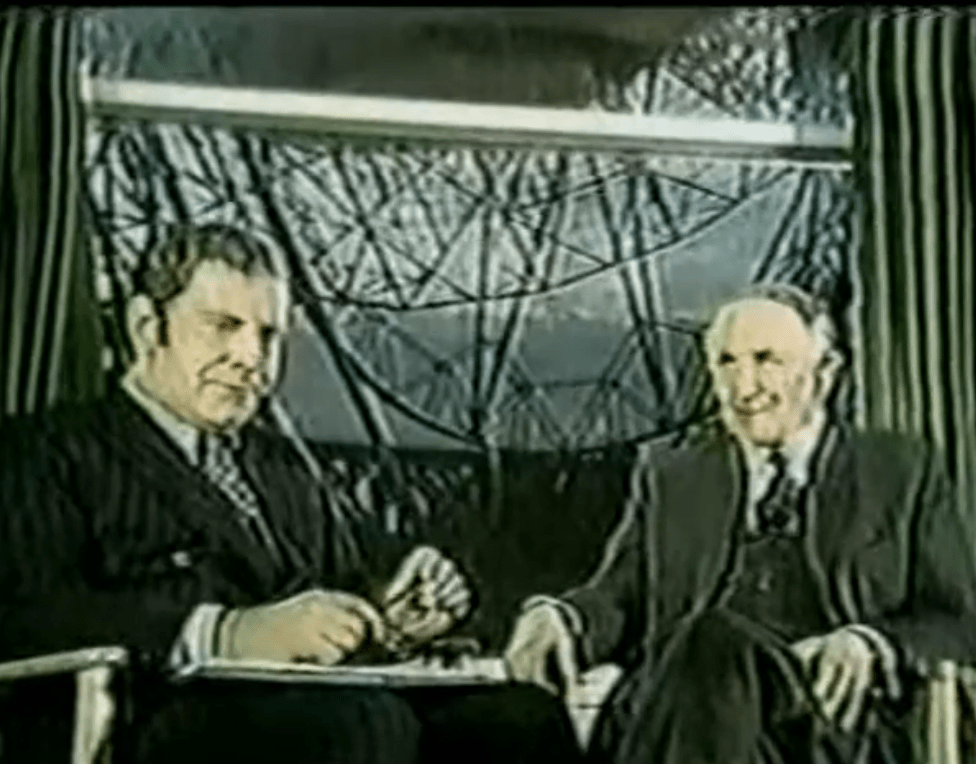
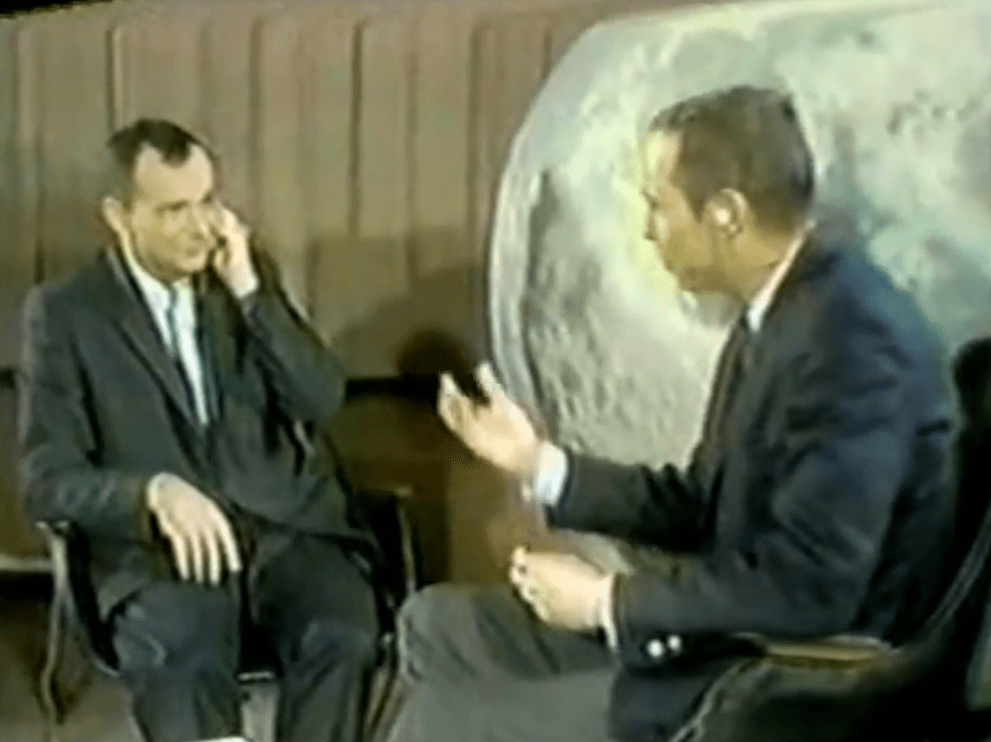
Throughout the broadcast, Cronkite regularly broke away from the action to talk to leading scientists. Viewers were taken to Jodrell Bank observatory in England, where the eminent astronomer Bernard Lovell sat with a CBS reporter, a radio telescope looming behind them. Then to the Jet Propulsion Laboratory, where American geologist Eugene Shoemaker sat beside a giant lunar globe, excitedly answering questions.
Scientists had a complex relationship with Apollo. Many scientists at the time looked at the price tag for the “man-in-space” program, and couldn’t help but imagine how many scientific robots could have been constructed and sent across the solar system with those dollars. Some were extremely vocal about this, to the frustration of NASA officials. Many scientists were concerned that science was being misused to legitimize missions that had dubious scientific value. But others agreed with NASA’s arguments that Apollo was an important part of selling a space program and enabling long-term access to space. And others still were genuinely excited about the possibility of doing field work on the Moon.
Apollo 8 in particular had limited scientific value, but science featured heavily in the broadcast nevertheless. This may have been exactly the sort of “science-washing” that worried so many scientists. But Lovell and Shoemaker had the opportunity to explain the exact limitations of Apollo 8 to the CBS audience themselves. In doing so, they highlighted the work of lunar robotics teams that preceded the Apollo missions, and explained the questions that future Apollo missions might help to answer. Missions that Apollo 8 would enable.
Below, you will find quotes from these interviews, with my quick analysis. To keep this post short(ish), I have tried to limit my descriptions to things I find most interesting or relevant. If you’re interested, I highly recommend watching the entire clips. They are a fascinating look back at science communication during our first trip around the Moon.
Note: Many thanks you to the anonymous person who uploaded all this archival footage. I’m not linking all of it in this post–in part to avoid clutter and limit length, but you can find the clips by a search (for CBS Apollo 8 footage), or find the links here: https://bsky.app/profile/inverting-vision.bsky.social/post/3mihebmpves23
Being interested in lunar robotics, I was looking to see how the robots would show up, especially Lunar Orbiter. Not long after the launch, Cronkite cut to Terry Drinkwater reporting from the Jet Propulsion Laboratory (JPL) in California, which built and operated some of the robots.
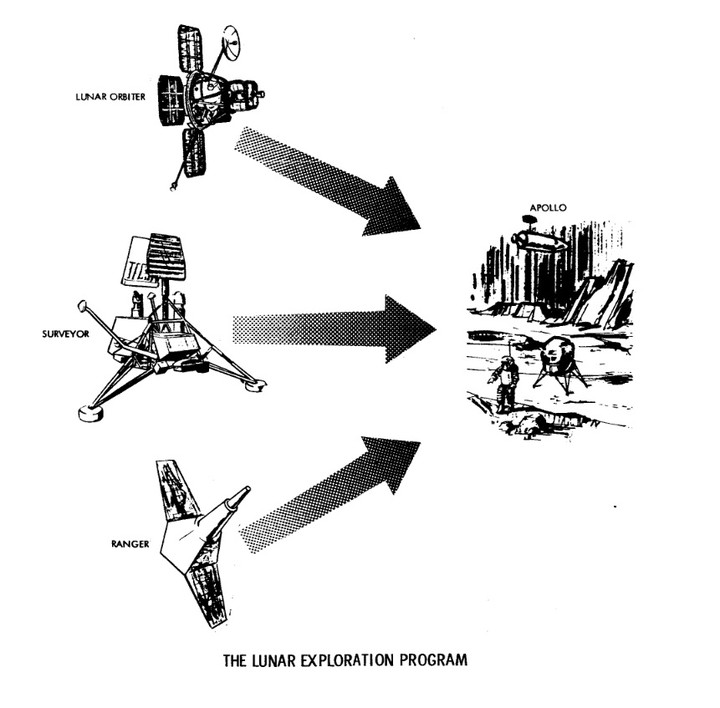
Drinkwater reports that people watching the launch at JPL are “thinking back to all that has gone on here in unmanned exploration of the Moon.” Then he takes the audience on a whirlwind tour of the Pioneer, Ranger, Surveyor, and Lunar Orbiter spacecraft. They show models of each vehicle, and images they produced, discussing how each contributed to science and Apollo planning.
Later, they cut to an interview with Bernard Lovell. Lovell was director of the Jodrell Bank observatory in England, which had a fascinating role in early lunar exploration. They used their telescope to track the first robotic lunar missions, even intercepting image transmissions from Soviet lunar probes. Lovell was very straightforward about the limited scientific value of Apollo 8. “The orbiters and the landers have already given us a very great deal of scientific information about the nature of the lunar terrain and the constitution of the surface,” he said, explaining that “for a really significant addition to that knowledge, we will have to wait until the Apollo ship actually lands men on the Moon, and that really would be terribly exciting…”
When Apollo 8 arrived at the Moon, astronaut Jim Lovell began narrating what he saw from the spacecraft. He described a grey lunar surface that looked like plaster-of-paris. After their report, Cronkite brought in “Doc Shoemaker,” who sat in JPL next to a massive lunar globe, wearing his bolo tie. Shoemaker was one of the foremost of the new generation of geologists interested in taking their field work to the Moon.
Cronkite replayed Lovell’s description, inviting Shoemaker to “point to those spots on the Moon” as Lovell described them. Shoemaker silently points to the Sea of Tranquility as Lovell says that the mare “doesn’t stand out as well here as it does back on Earth.” Doc Shoemaker then points to the surrounding craters as Lovell begins talking about them. It’s really delightful, and having a human expert directly point out these features on a map adds something that animations don’t quite capture. I know that there were people watching at the time who still remember Shoemaker’s appearance, and it influenced their career direction.
“You did that one so well, you won your audition,” Cronkite says to Shoemaker. Then he starts asking Shoemaker about orbits, discussing gravitational pull and its relationship to orbital speeds. They introduce the ideas of “pericynthion”–the part of a lunar orbit passing closest to the Moon–and “apocynthion,” the point of an orbit farthest from the Moon. Cronkite mentions that the “Cynthus” part of those terms refers to an old name for the Moon. Shoemaker corrects him, claiming that those terms are actually more generalized, for the orbit of any smaller body around a larger body.
Today, the generalized terms usually used are periapsis and apoapsis. But Cynthus is an interesting Greek term. Appropriately, it was sometimes used as a name for Artemis, because the Greek goddess was by legend born on Mount Cynthus. Artemis was very much associated with Selene, goddess of the Moon. Any satellite of another body can be considered a “moon,” and the term “moon” was used that way even into the 60s, so its usage as a general term is also plausible. But Shoemaker was a geologist who was relatively new to spaceflight, so he could have been mistaken. My understanding is that these terms did in fact primarily refer to lunar orbits during Apollo, and that Cronkite was right here.
Regardless, Cronkite concedes. “Well I had one correct fact out of four there, that’s not bad, batting .250 on the apo…pericynthion.”
As the astronauts flew around the Moon, they cut back to Bernard Lovell again. This interview is particularly charming. While Lovell, a very distinguished scientist, was fairly even-keeled in earlier interviews, he is now visibly excited. Or at least, I think, as visibly excited as an old English astronomer can get.
He was apparently repeating “fantastic, utterly fantastic,” according to CBS reporter Morley Safer. Then Lovell gives his reflection:
“I must confess this is really one of the great moments…it’s very hard to believe that there are human beings actually flying around the Moon and giving this description of what they see. I don’t know if other people are like I am over this, but although as a scientist I have seen the photographs of the Moon so often, through so many telescopes, and more recently, these marvelous photographs sent back by the cameras. It still really almost bewilders me to try to understand that now at this moment we’ve been listening to a human being there giving these descriptions of what the volcanoes look like…”
There are several points at which Shoemaker talks Cronkite and the audience through things that the astronauts are seeing. At one point, they get confused by the fact that astronauts are talking about craters with names that are suspiciously familiar.
“I don’t find [those craters] on my Moon map here: Carr, Miller, Borman, Houston, Collins,” Cronkite reports. “They sound like they’re named after a bunch of people at the Houston manned space center to me, and I wonder how they do get these names, and how long they’ve been named that, and whether or not these fellas are going to name a few for the first time…”
Shoemaker was also befuddled. The astronauts were near the far side of the Moon, and he realizes what happened:
“[they] actually were just off the edge…of the globe…this is Mare Smythii, which was mentioned…a number of the craters they mentioned have no formal names yet–they’re back around the edge of this model, and cannot be seen from the Earth. They have been recorded on the unmanned Lunar Orbiter photographs, but no formal names have been attached. Since they have to have some kind of handle to be talked about, the astronauts have just given them names, and of course it’s fun to use the names that are most familiar, the names of your comrades in this kind of work. So I was a little puzzled too, I didn’t know what those names were, but it soon became apparent that these were the ones that had just been adopted for the mission.”
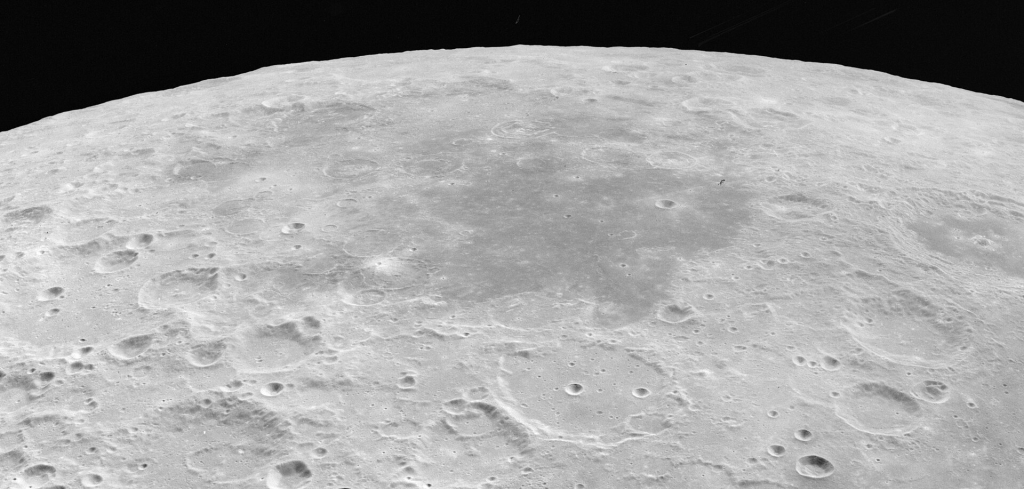
Then he gets to describe the International Astronomical Union, and their naming processes, to the audience, bringing them into the world of space nomenclature.
He mentioned the Lunar Orbiter photographs there, which get a lot of air time. In other portions of the broadcast, they cut back to pre-recorded videos with the astronauts talking about their mission. In one, Bill Anders, the primary photographer on the mission, talks about their photographic objectives.
“The Orbiter photography was very good,” he explains, “but where the Orbiter photography was not so good, because the Orbiter was in highly elliptical orbit…we hope to improve on that…”
Then Shoemaker talks Lunar Orbiter, holding up a far-side image. Unfortunately, the recording on Youtube cuts out here.
But my favorite part is a recording of Jim Lovell talking about their flight path, using a Lunar Orbiter photograph of the Sea of Tranquility. He describes landmarks in detail, making analogies to explain the scale to the audience, like the length of the runway at Ellington Air Force base.
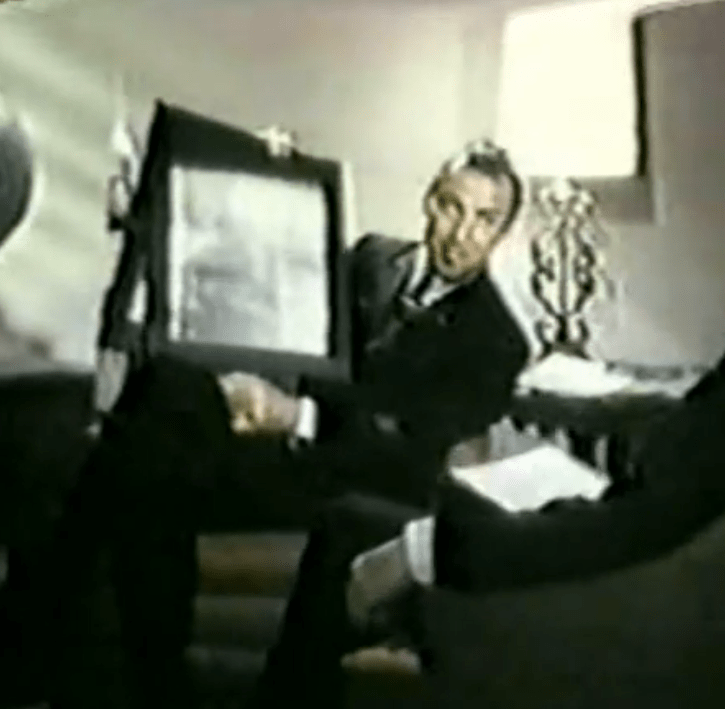
“You already talk like you’ve flown it and seen it,” the reporter interviewing him says.
“Yeah, this area has become quite familiar to me…I know it quite well,” Lovell replies.
Then Cronkite cuts in: “Jim Lovell, who ‘knows it quite well.’ He hadn’t been to it before, but such is the study and the training of these astronauts that he felt he did.”
To me it speaks to the power of the Lunar Orbiter images. I think a lot about the telepresence sometimes created by the use of remote sensing technology for exploration. While a visceral sense of telepresence was fairly limited in early lunar robotics, there are often little moments where you catch a glimmer of it. This is one of them.
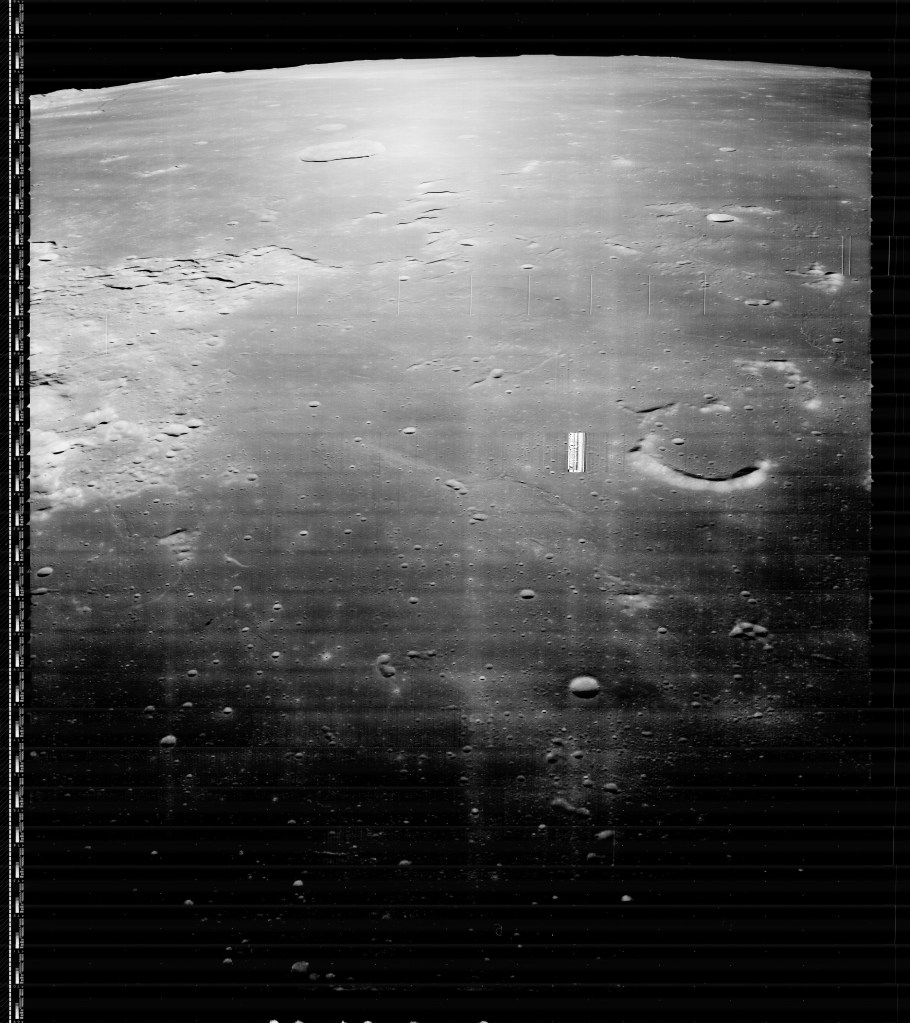
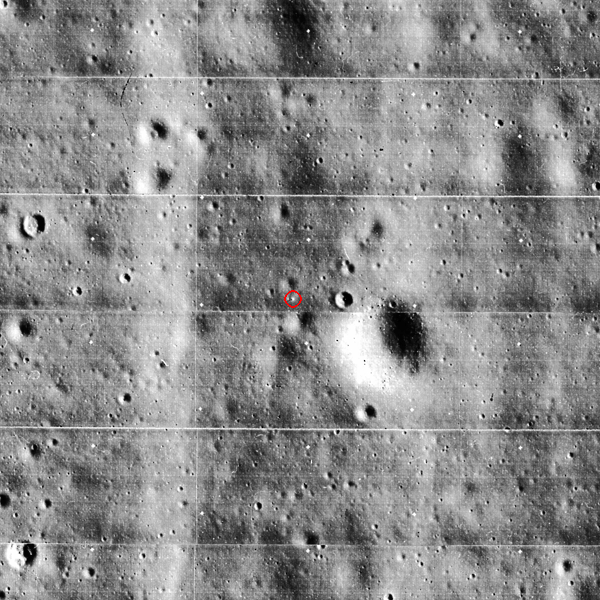
I am reasonably certain that Lovell is holding a cropped and annotated annotated version of the Lunar Orbiter photograph above, taken on Lunar Orbiter V. If so, he gets some of the details wrong. For example, he mentions a “half-hidden” crater that he refers to as “Maskelyne B” off the edge of the picture. It’s really Maskelyne F, seen just to the right of the rectangular artifact in the middle of the full image. Maskelyne B is actually visible in the image he’s holding (in the upper central portion of the frame, behind the large crater, which is Maskelyne).
Honestly, I don’t fault him for making mistakes. The astronauts spent time under the guidance of scientists studying these images, but it was a pretty wild crash course. For Apollo 8, the goal was for them to be able to identify photographic targets. It was more important to visually recognize targets than to be able to accurately name them. But this was all part of the show–using science to convey a sense of exploration and to legitimize the project. The astronauts had to become something like amateur science communicators themselves.
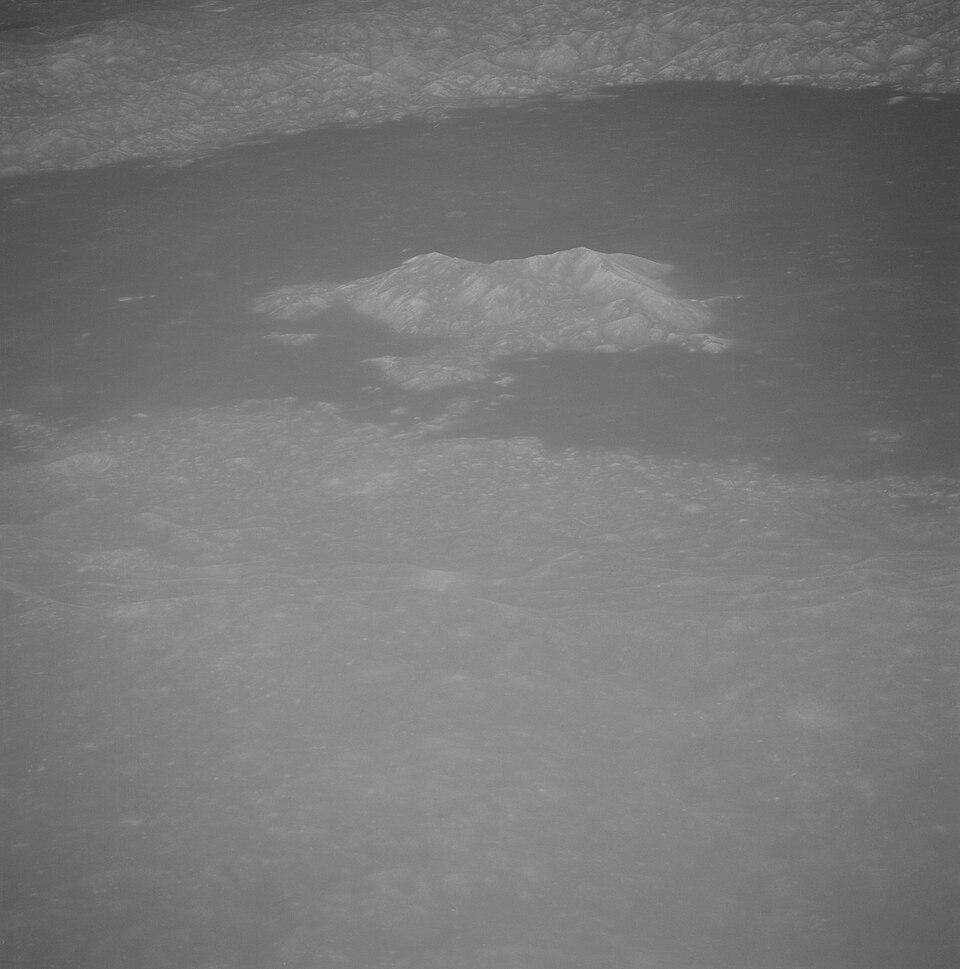
And in fact, the Apollo 8 astronauts produced many spectacular images, like this one showing the central peak of the far side crater Tsiolkovsky:
Later in the clip, they cut to Shoemaker again, who describes their flight path and some of these photographic objectives. There was real science to be done here, however limited. Science communication like this, even if it is flawed, can often serve very important ends for a community hoping to create excitement and support for their research.
Robert Jastrow, an astronomer and NASA official, also makes a couple appearances. He does a good job of explaining some of the overall scientific objectives of lunar exploration, and the findings of the robotic missions thus far. One of the biggest questions that needed answering was the age and origin of the Moon.
“The information returned by spacecraft has answered some questions in that connection,” Jastrow explains, “but raised as many as it’s answered…”
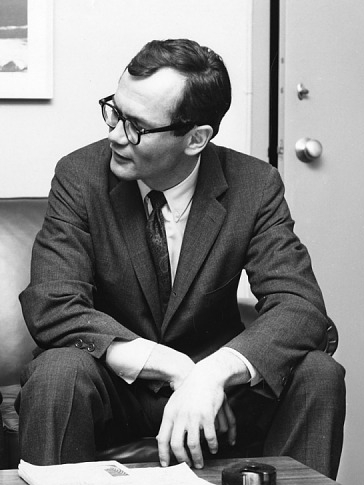
They talk about the scientific return of Apollo 8, and Jastrow, like Bernard Lovell, frames it as a stepping stone towards the real scientific return expected from a landing.
Jastrow then talks through some Lunar Orbiter photographs with Cronkite. “It’s a fairly new crater,” he says, holding up an Orbiter photo, “an expert like Gene Shoemaker would have to tell us exactly how old it is…” He mentions Meteor Crater in Arizona, talking about how scientists identify the difference between new and old craters. Shoemaker had done extensive work at Meteor Crater in his attempt to understand lunar cratering.
In one appearance with Jastrow, Cronkite asks jokingly whether the Moon is made out of green cheese, teeing up Jastrow to talk about Surveyor and its findings about lunar composition.
At the beginning of the video after this one, Jastrow and Cronkite talk about the capabilities of astronauts vs. robots. Jastrow makes the claim that a robot would be more expensive, but I think this probably relies on the assumption of a robot that could match the generalized capabilities of a human. Certainly the capabilities of robots in the 60s meant that humans had a bigger advantage over robots than nowadays–but even then, a great deal could be done with robots for a relatively low cost, which is exactly the source of much Apollo skepticism in the scientific community.
At the end, Jastrow and Cronkite talk about Mars.
Of course, this was happening in 1968, amid a great deal of turmoil across the country and the world. In a special report summarizing Apollo 8, Cronkite framed the contrast with characteristic eloquence:
“A year of trouble and turbulence, anger and assassination, is now coming to an end in incandescent triumph…”
https://www.c-span.org/clip/reel-america/user-clip-cronkite-introduction-to-apollo-8/5198544
Many scientists weren’t above seeing Apollo’s significance beyond science, as seen in some of the videos above. In the special report, they included more interviews with Bernard Lovell, Harold Urey, and Eugene Shoemaker:
https://www.c-span.org/clip/reel-america/user-clip-scientific-perspectives-on-apollo-8/5198546




 Inverting Vision


.jpg)